
Before she travels to school each morning, LeAnne Fayyad watches her grandmother at the foot of the TV. Kneeled in front of their sofa, body firm in prostration, she prays. Flickering on the screen, a news reporter’s voice is overshadowed by the sounds of ammunition and bombs dropping over the heads of thousands that look like her, speak like her, anguish like her. Fayyad is thousands of miles away from the Middle East and thousands of miles away from Jordan where her family resides mere miles away from direct conflict. Her pain, however, remains with the hearts of those she knows as her own.
“My family immigrated here from Jordan a while ago,” Fayyad said. “My family really loves going back there and seeing loved ones, and it’s really difficult now because all the places around Jordan have been getting bombed, so we have to worry about what could happen to us if we do visit. It’s really sad to see what’s going on because I have family there and it’s scary to wonder if they’re always going to be okay.”
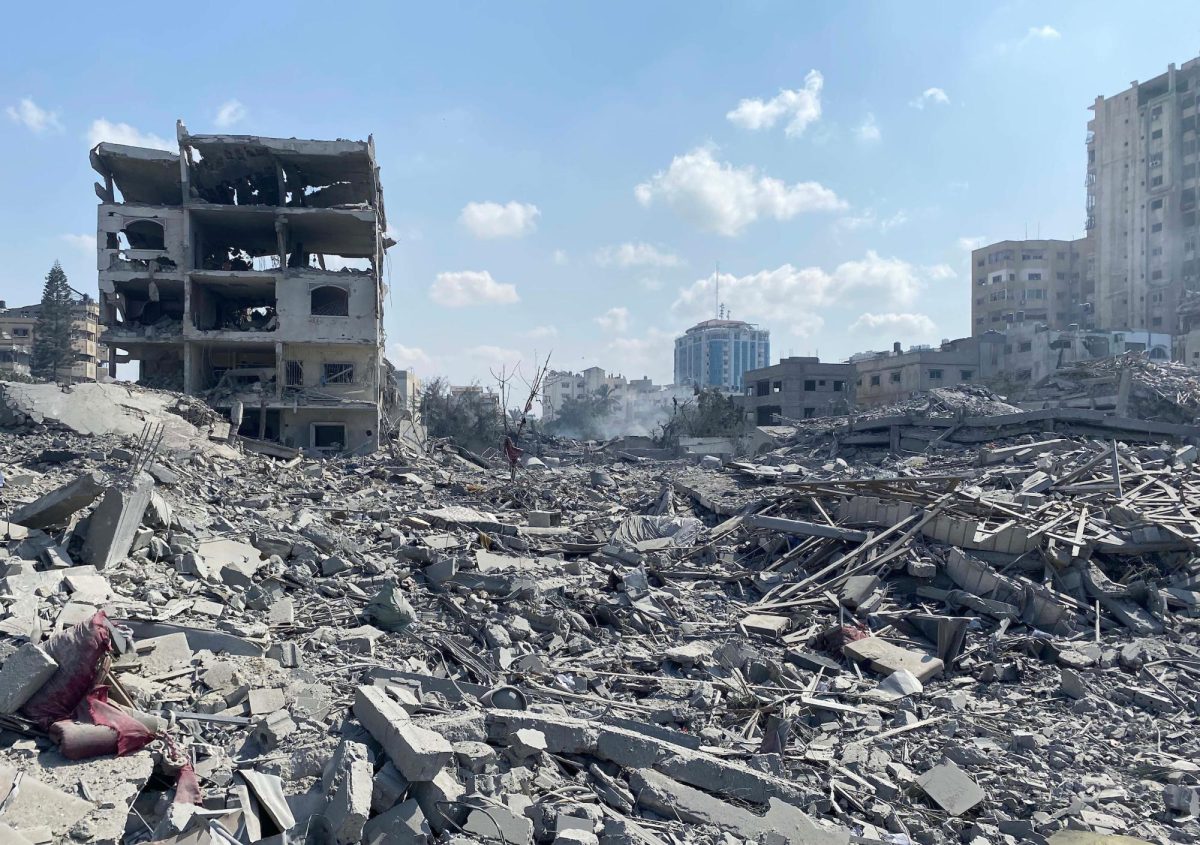
Following the Oct. 7, 2023 attack by Hamas, Israel began a large-scale bombardment and blockade of the Gaza Strip, eventually leading to a full-scale invasion of Gaza on Oct. 27. According to the IPC, the number of people residing in Gaza in IPC phase 5, the phase of famine classified as catastrophic and representing the highest possible level of food insecurity, is estimated to be over 1.1 million.
By 2024, the conflict had expanded beyond Gaza. Almost immediately after Oct. 7, Hezbollah, a Lebanon-based political party and militant group, began launching rockets from southern Lebanon towards Israel. What began as a border conflict escalated over several months into a broader confrontation. By mid-to-late 2024, Israeli airstrikes targeted Beirut suburbs, launch sites, and senior Hezbollah commanders. By that September, the Israel-Hezbollah conflict had become the largest since 2006.
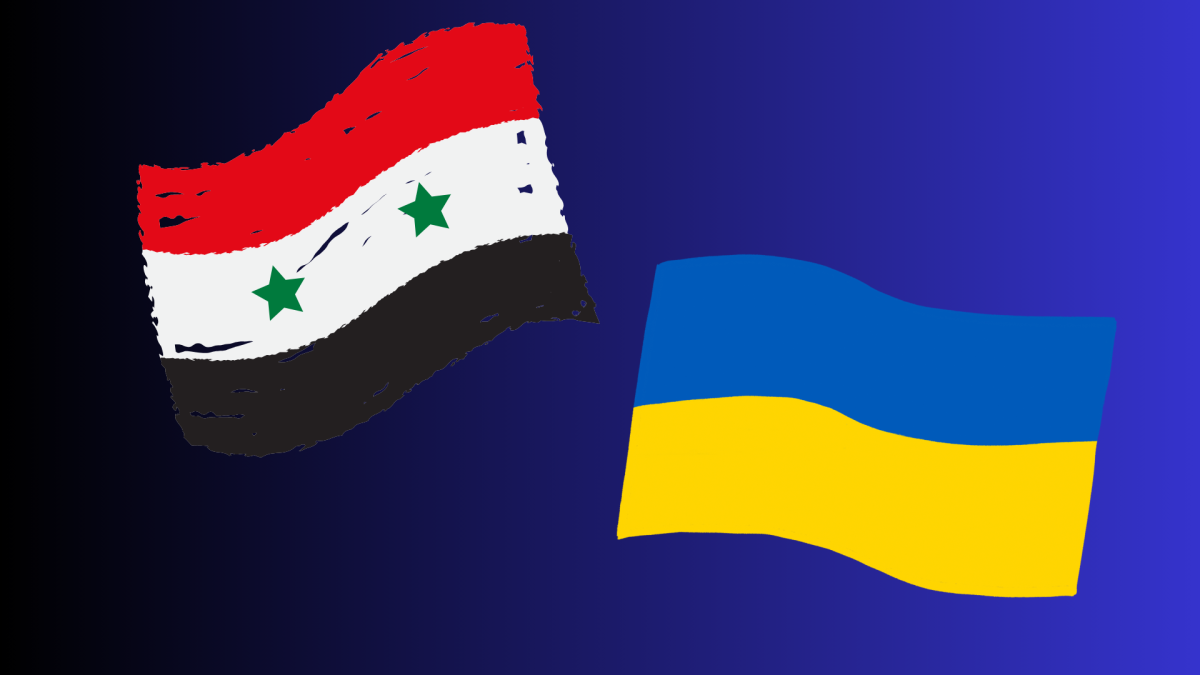
That same year, Israel also carried out repeated strikes in Syria in which Damascus airport, Hezbollah transfer routes, and Iranian weapon depots were targeted within the country in order to prevent Iran from sending weapons to Hezbollah or Hamas. In April 2024, Iran launched its first-ever direct state-to-state attack on Israel in response to the killings of Iranian commanders in Syria, marking a significant escalation in regional tensions.
Fayyad, however, does not see such details. She does not need to know the exact dates of retaliation vows or the names of those who called for war. Her fear is with the safety of her family and the uncertainty of whether their homes will still exist tomorrow.
“A lot of times on the news, I’ll just see a new country in the Middle East being bombed,” Fayyad said. “It just makes me really sad especially because I hear my family talking about it and they care so deeply because that’s their home, they’ve lived there basically their entire lives. And now so much of it is gone, or they had to migrate out of fear for their lives.”
In Michigan, home to the largest Arab American population in the US, much of the Middle Eastern community is concentrated in Southeastern Michigan. Estimates place between 300,000 to 350,000 Arab Americans in the greater Detroit area, with a significant portion residing in Dearborn. Yet despite the size and strength of her broader community, Fayyad still feels isolated in her grief.
“All the Arabs who might feel the same way as me are scattered around the city, so I feel alone a lot of the time,” Fayyad said. “Sometimes it’s like it’s just me and my family who feel the conflict on a personal level, like we’re the only ones who are scared. And that makes everything more difficult.”
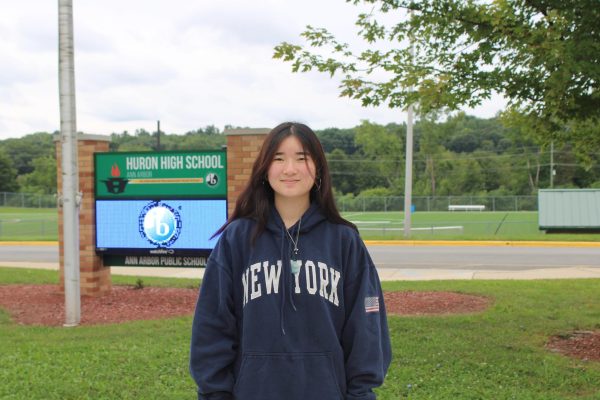
As a student at Skyline High School in Ann Arbor, Fayyad often feels unable to find community in her academic peers. As of 2025, people of Arab descent made up just around 0.9% of the Skyline community with only around 10 of her classmates throughout the entire school holding similar heritage to her, according to the 2024-2025 school profile. To Fayyad, this lack of representation has deepened her sense of loneliness as the conflict has escalated.
Each morning before school begins, the conflict has already followed her into the day. It lingers in classrooms, hallways, and the back of her mind. Though physically removed from the violence, Fayyad carries its weight with her, a reminder that global conflict is far from just a news channel. To her, it is personal, ongoing, and impossible to turn off. For Fayyad, the war is not a distant headline or a political debate. It is far from brief news flashes and Instagram posts. It is a constant presence woven into daily family phone calls and morning prayers, even from thousands of miles away.