
Disclaimer: This article includes graphic details of the Holocaust and World War Two (WW2).
Arthur Horwitz, in the bathtub of his New Haven home, carefully cupped his ear into the chest of the wall. He listened quietly to his mother, Sally Horwitz, voice on the other side, the morbid tales echoing into him. At five years old, Arthur Horwitz had just begun learning the atrocities of the Holocaust through the very walls of his life.
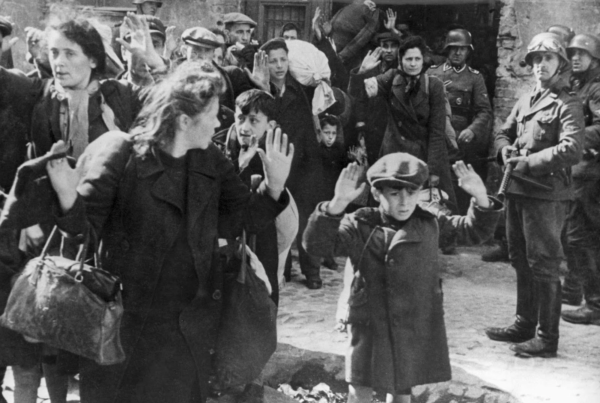
From 1933 to 1945, the Nationalist Socialist German Workers’ Party (Nazi) led by Adolf Hitler, amassed the genocide of six million Jewish people, plusother minorities including the Romani, political opponents, homosexual men, Jehovah’s Witnesses, etc. This tragedy is now widely referred to as the Holocaust.
On Sept. 3, 1939, two days following the invasion of Poland, the Germans infiltrated Zwolen, Sally Horwitz’s hometown. She was 11 years old; when she was confined into a ghetto; when she was exploited for labor; when she became a victim of the Holocaust.
There are different classifications of the camps utilized in the Nazi regime: concentration camps, transit camps, forced-labor camps, and extermination camps. Each served a different purpose in fulfilling the elimination and persecution of the Jewish population.
Sally Horwitz was sent to a forced labor camp and then Skarzysko, a concentration camp. Nearly averting the demise of the Treblinka death camp, which was one of six barracks that employed gas chambers to “efficiently” murder.
On May 15, 1945, Sally Horwitz was liberated from Skarzysko where 20,000 out of 25,000 people there had died. Out of the entire family of 91 people, 85 had died, and six had survived — including Sally Horwitz and her two sisters.
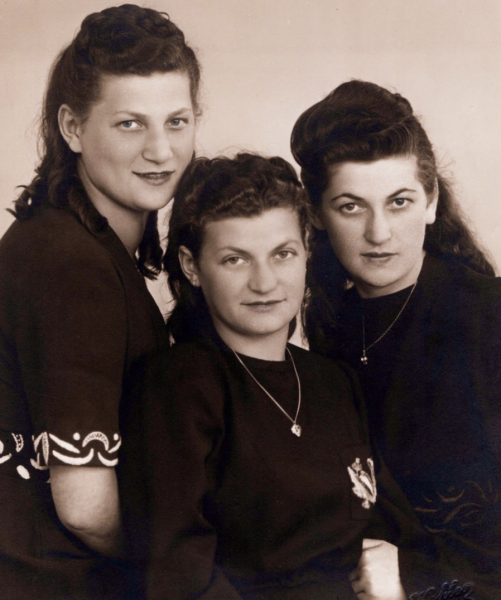
Sally Horwitz was 17 years old, and 70 pounds at a height of 5 ‘6”.
“A human skeleton,” Arthur Horwitz said.
These were the stories that Arthur Horwitz knew at a too-young age.
“That’s how I am connected to the Holocaust,” Arthur Horwitz said. “I am the remnant of a deliberate, coordinated effort, aided and abetted by many civilian collaborators and bystanders, to exterminate Jews — men, women and children, just because they were Jews.”
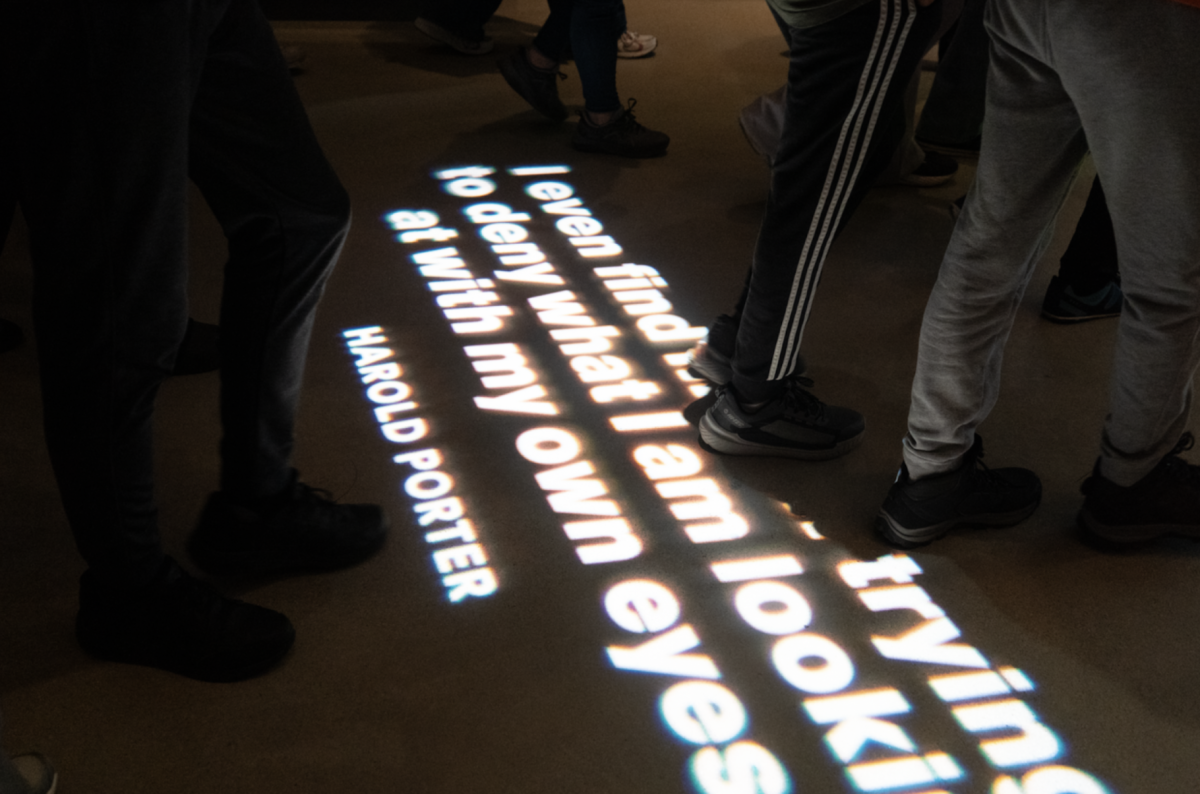
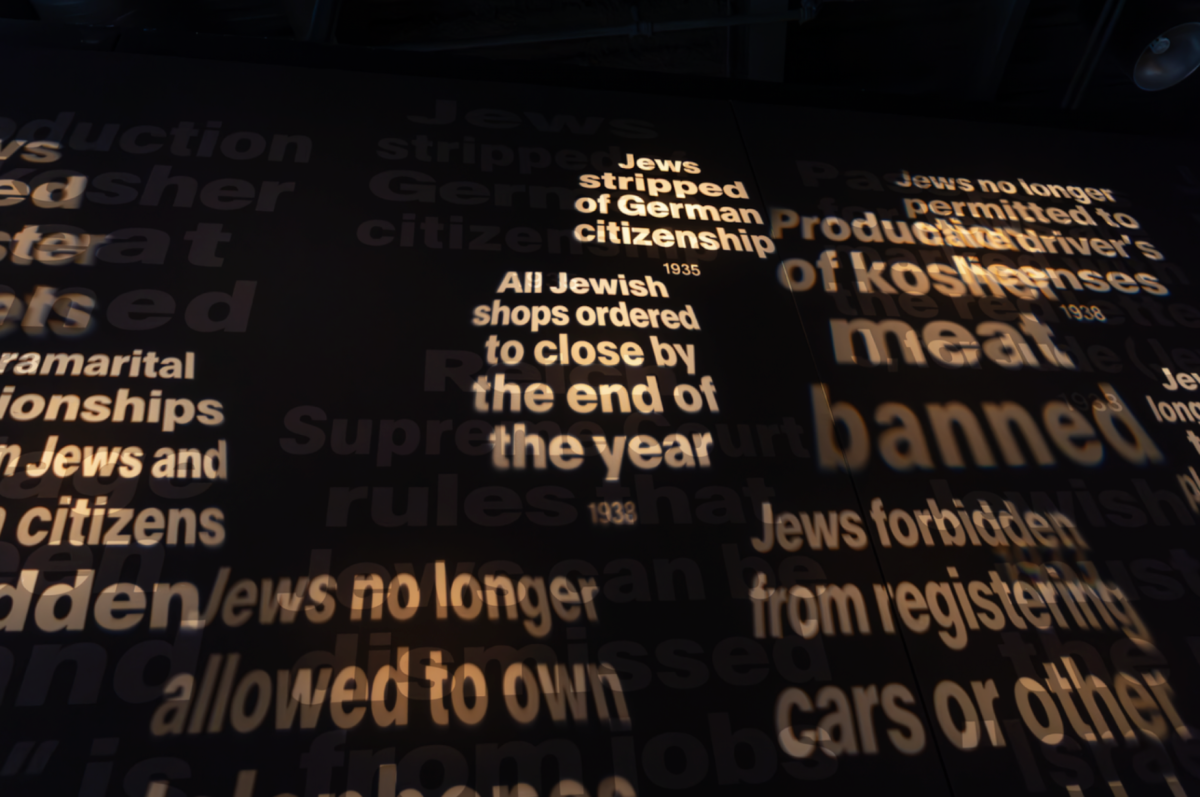
On March 27, 2026, the memories from eavesdropping as a child, is what he now shares with students on the field trip to the Zekelman Holocaust Center for an Interdisciplinary Unit (IDU) on antisemitism.
Attendee of the field trip and social studies teacher Samantha Monroe started instructing at Huron five years ago. The same time the IDU was implemented into the curriculum.
“Our statement of inquiry is ‘the misrepresentation of identity has consequences,’” Monroe said. “I think it creates a humanizing experience for students to explore identity groups and kind of just appreciate the human experience that we all share.”
The unit began on Wednesday, March 11, with English 9 and WHAG classes commencing in tandem. English 9 mixes the analysis of Nazi propaganda and reading of Art Spiegleman’s “Maus II: A Survivor’s Tale: And Here My Troubles Began” with WHAG’s chronological material on WW2.
On March 25 and March 27, there are two field trips to the Zekelman Holocaust Center divided between the student group that include a guided tour of the museum rotating with a Next Generation Speaker.
“I do think the Next Generation Speaker is really impactful, particularly because it offers an opportunity for that human connection,” Monroe said. “When we are talking in class, it might be a little bit easier for us to feel removed from the topics.”
Arthur Horwitz, as a speaker, binds classroom learning and second-hand experience. He shows that six million deaths is beyond a statistic.
And it holds on.
Monroe has been teaching the lessons every year, but there are times when she needs to take a pause.
“Because it’s heavy content. And it’s back-to-back heavy content,” Monroe said. “Then towards the end of our IDU, we’ll look at the results of the Holocaust. And I find that to be a really difficult lesson emotionally.”
It is in Jewish tradition for birthed children to be named after deceased individuals. In 1954, Arthur Horwitz was born and received the Hebrew name of his mother’s little brother: Meier.
Meier was six years old when the Germans invaded his life, and was one of Sally Horwitz’s 85 relatives who had died during the Holocaust.
“I now carry his name, the burden, and responsibility of living two lives,” Arthur Horwitz said. “Mine and the one he never had the opportunity to live.”
The Holocaust ended 81 years ago.
“It shaped my life, family and career,” Arthur Horwitz said.
But it still lives on.
“I hope it helps students see just how relevant it is to talk about history,” Monroe said. “Because it’s something that follows us.”
Sally Horwitz died in 2014, but it is her form of resistance to antisemitism. “Her revenge” by surpassing a time meant for her death.
“As the child of a Holocaust survivor, speaking with students and sharing my story, and my mother’s, provides me with hope . . . to assure that antisemitism and intolerance, baseless hatred leading to dehumanization, scapegoating, and even extermination have no place,” Arthur Horwitz said. “No home in America or anywhere in the world.”