

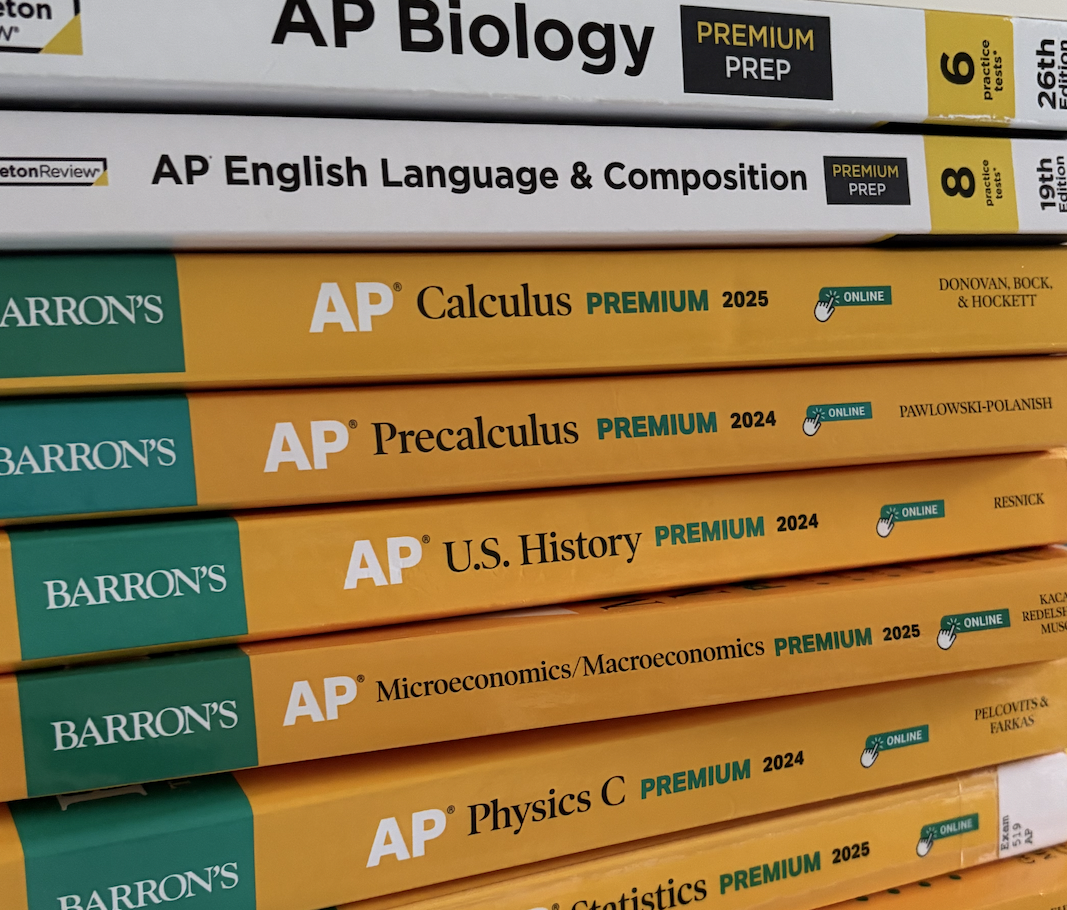
College competitiveness, personal motivation, lower tuition, college credit, parent pressure, or other factors are the reason high school students take AP classes. College Board, a non profit organization, created Advanced Placement (AP) classes, as rigorous, college-level courses that give students an opportunity to earn college credit. These courses range from maths, sciences, social studies, world languages, english, and others. While AP classes are associated with high expectations, many students view the rewards as worth the challenge.
As students enroll in numerous advanced courses, stress becomes a guaranteed aspect of high school. Having the ability to balance academic rigor along with a personal life is overwhelming.
Vincent Moreno is a senior at HHS, who took AP and DP classes throughout high school, specifically taking six of such classes this year alone.
“Originally, I was very stressed with my heavy workload of 5 AP courses. However, throughout the year, I have found ways to work more efficiently, allowing for more free time to focus on things other than school,” Moreno said.
This experience conveys a common pattern among high school students. The rigor will lead to stress, but by learning the structure of a class through study habits through trial and error, students can adapt and have success in AP classes. The workload consists of pressure, however Moreno highlighted his growth in soft skills, such as time management, which can be beneficial for him in college and a career.
Beyond the stress, students must also justify whether the reward for AP classes justifies the time and energy spent. The goal of a college credit and possible academic awards is a significant motivating factor in persuading students to take these demanding courses.
“I believe that AP classes offer a great opportunity for you to demonstrate your capabilities. Although they do provide a heavier workload, they can easily be rewarded by partaking in AP testing during May. Overall, the differing experience from regular classes, paired with the opportunity to earn a college credit make them rewarding,” Moreno said.
This challenge and investment can shorten the time spent by high school students in college. Not to mention, by obtaining college credit, the tuition paid for students will lower. The rigor of advanced coursework raises the question on whether or not students receive enough support to manage stress.
“I think that there are resources that are provided to students that can help manage their stress and course work. Many teachers go out of their way to host office hours after school, or even offer time during the day to assist students individually. These resources make it easier for students to get help when needed,” Moreno said.
Access to academic support resources such as teacher office hours, counselors, or after-school tutoring programs can assist students when navigating difficult courses. Some notable examples include Mr. Schuitman, Mr. Geiger, Mr. Caine, and others staying after school on select days to answer student questions. When these resources are accessible, obtaining a college credit becomes substantially easier.
Ultimately, advanced courses being worth it depend on the individual student. AP classes can introduce large amounts of stress, however they can foster soft skill development, academic growth, college readiness, college credit, awards, and financial benefits. If students feel it is right for them and can use resources effectively, the benefits could outweigh the downsides.