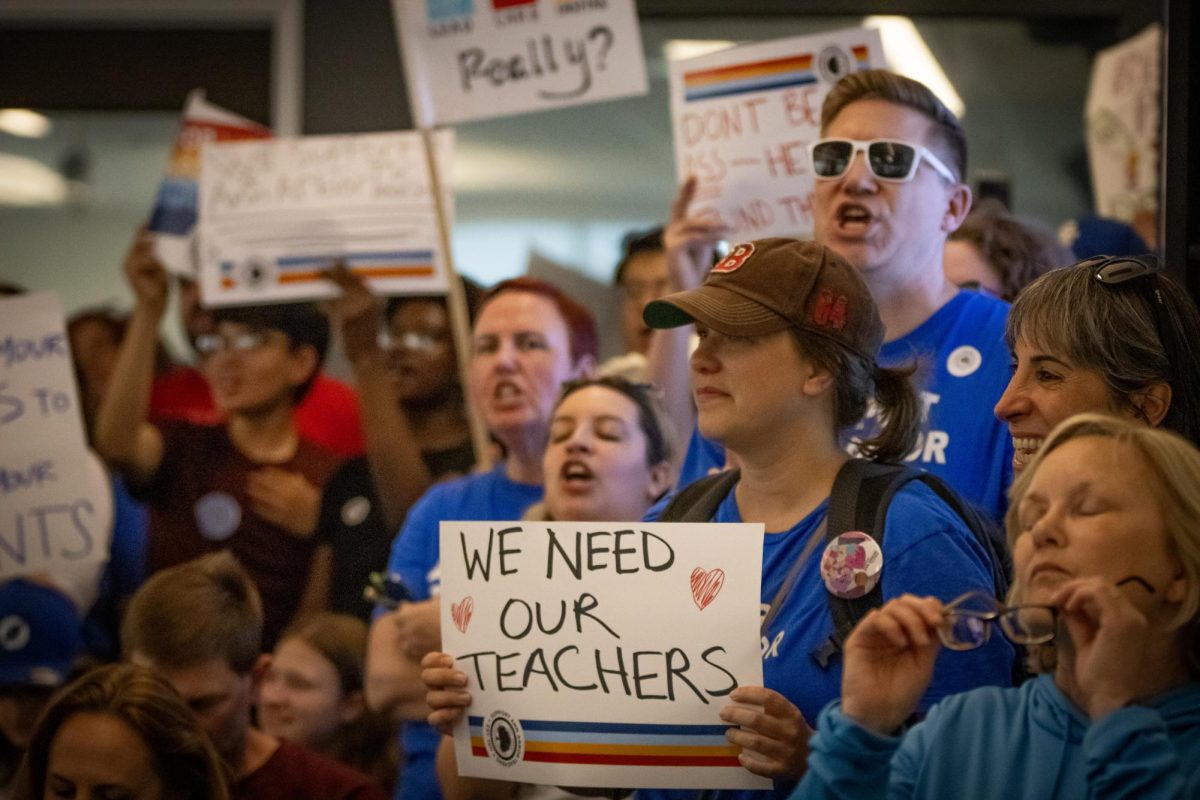

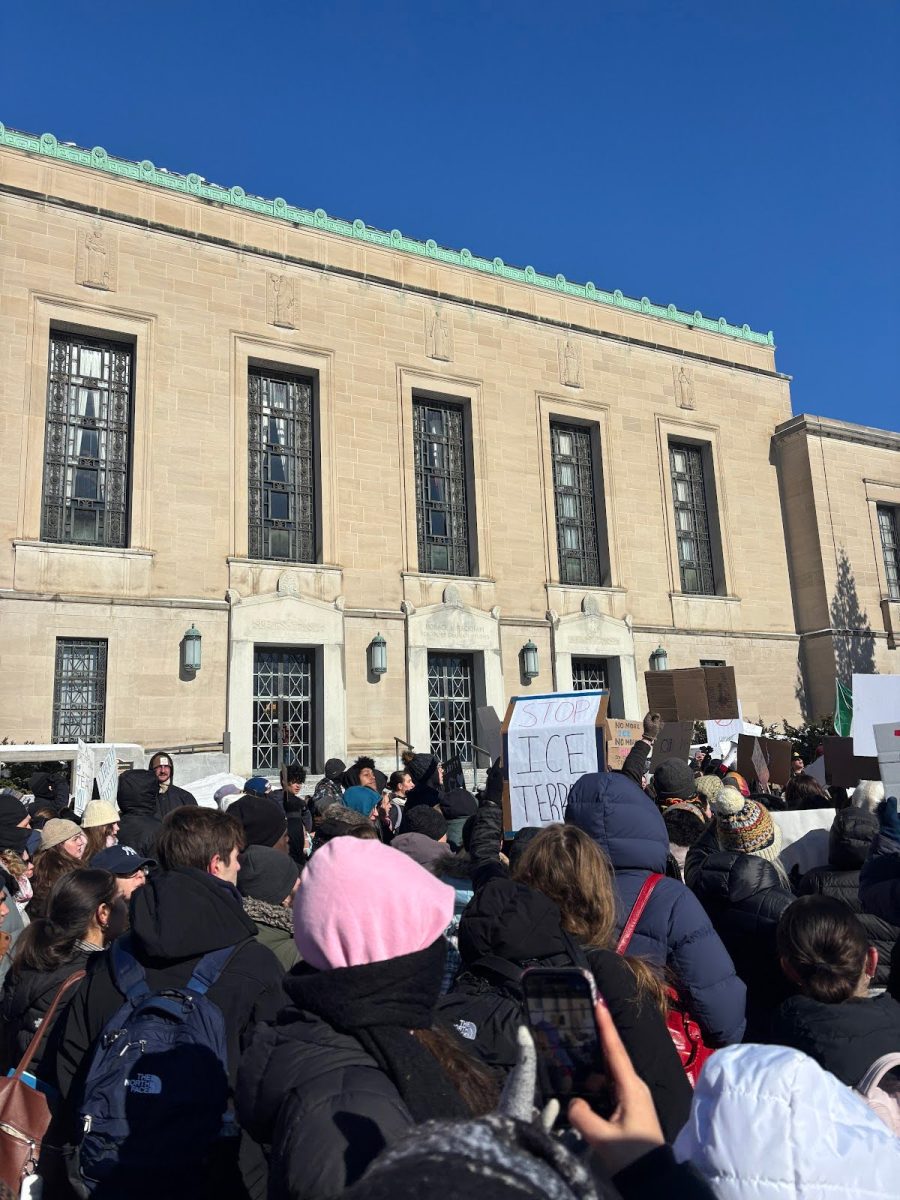
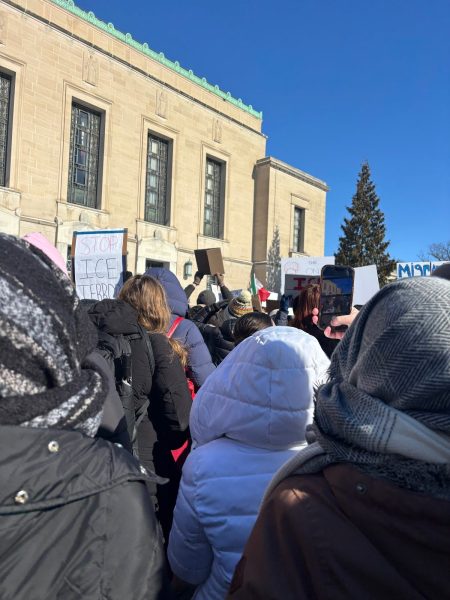
On Jan. 30, around 1800 to 2000 people marched in two columns to the University of Michigan’s Rackham Graduate School. There was an ICE protest in Downtown Ann Arbor, rumors of which had circulated in the Ann Arbor Public Schools (AAPS) district a few days beforehand.
(Mia Lin)
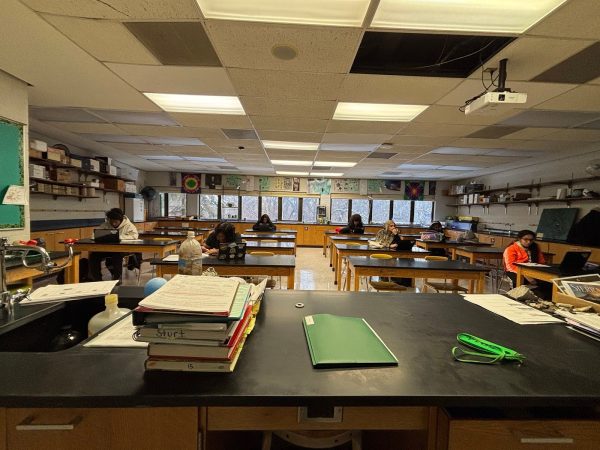
“There was a post on [Instagram] that I saw calling for people to skip school, skip work, for protests,” junior Johnny Kang said. “A majority of my friends are skipping [for the downtown protest]. I’m not in a place to skip school. I definitely would if it was up to me.”
The recent ICE activity in the area, along with nationwide events, has led to protests around Michigan and the U.S. As of Jan. 30, many people throughout the U.S. are joining a nationwide shutdown of no school, no work, and no shopping in protest of ICE and the Trump Administration’s crackdown on immigration. Three AAPS schools closed that day: Community High School, A2 STEAM, and Haisley Elementary School.
(Mia Lin)
These three schools “are unable to ensure sufficient staffing for a safe learning environment on Friday,” according to the AAPS website.
This may have been connected to the national shutdown.
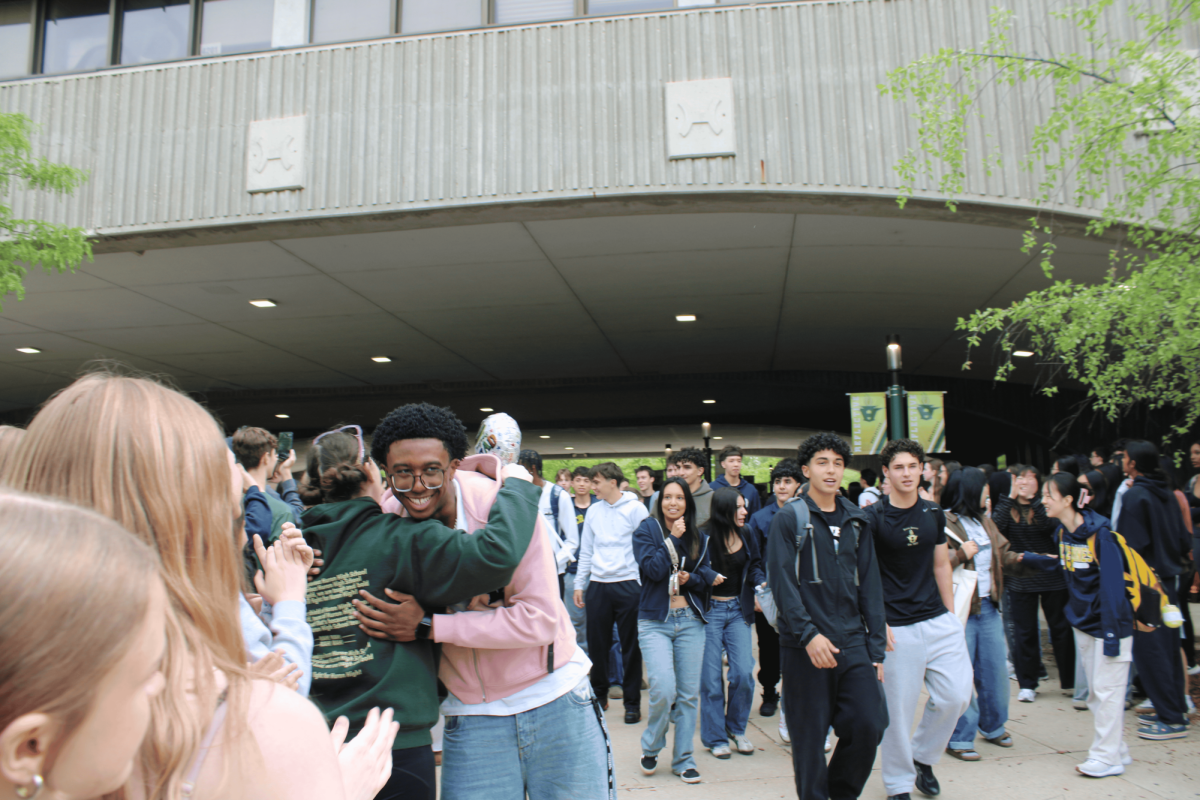
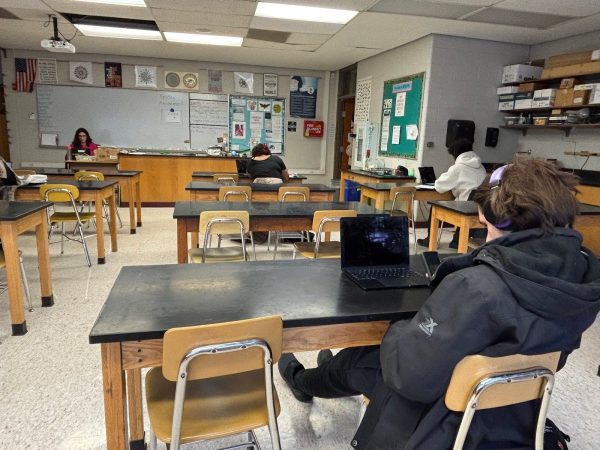
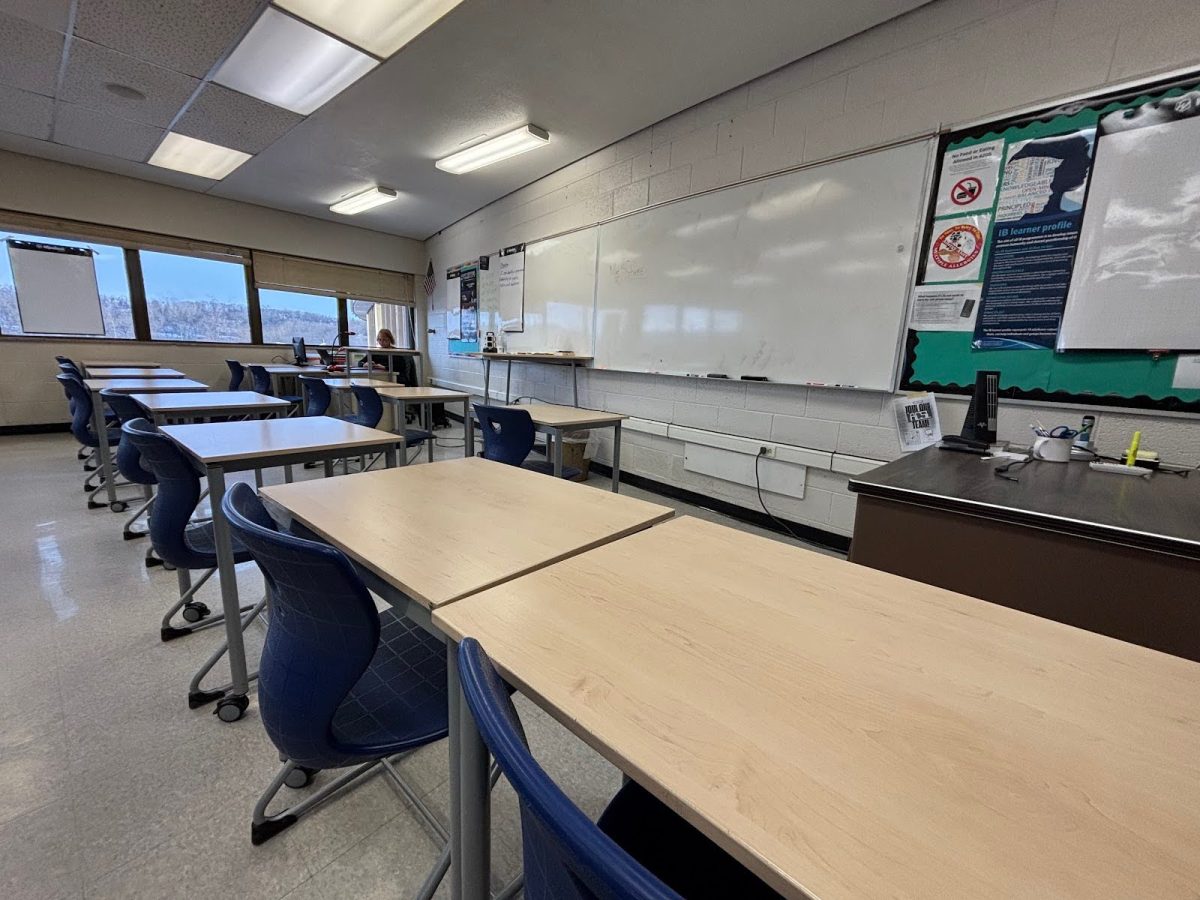
Throughout the day on Jan. 30, Huron classes were missing many students, with some only having half or a third of the students present. Many were absent from school to join the protest or out of solidarity for the nationwide shutdown.
“Protesting and civil disobedience [are] at the core of social change,” said senior Josephine Peters, who left school for around 2.5 hours to go to the protest. “I went because it’s one of the many things I can do to stand up for what I think is right because, personally, I know people who are terrified to leave their house due to ICE’s presence in our community.”
According to students who went to the downtown protest, the atmosphere was powerful.
“There’s definitely a sense of purpose in the air, and I would even say an underlying sense of uncertainty,” said an anonymous junior, who was at the protest for almost the entire school day, “but even through the ‘what if’s, the atmosphere stayed strong.”
Many students supported the protests because their family was personally affected by ICE.
“I think it’s so important to support protests like these because there’s power in numbers,” an anonymous junior said. “I went because my father is an immigrant and susceptible. I’m second generation, so it was very meaningful to be able to use my privilege and ability to protest and speak for what I stand for.”
Many AAPS students, including Peters, also attended ICE protests on Saturday, Jan. 31. There were multiple nearby, including at Jackson, Plymouth, and the intersection of Huron Parkway and Washtenaw.