
While school at the University of Michigan may stand as many students’ first time away from home, there is still the inevitable call from parents. Every week, mundane conversations from “how are you” to “how are classes.”
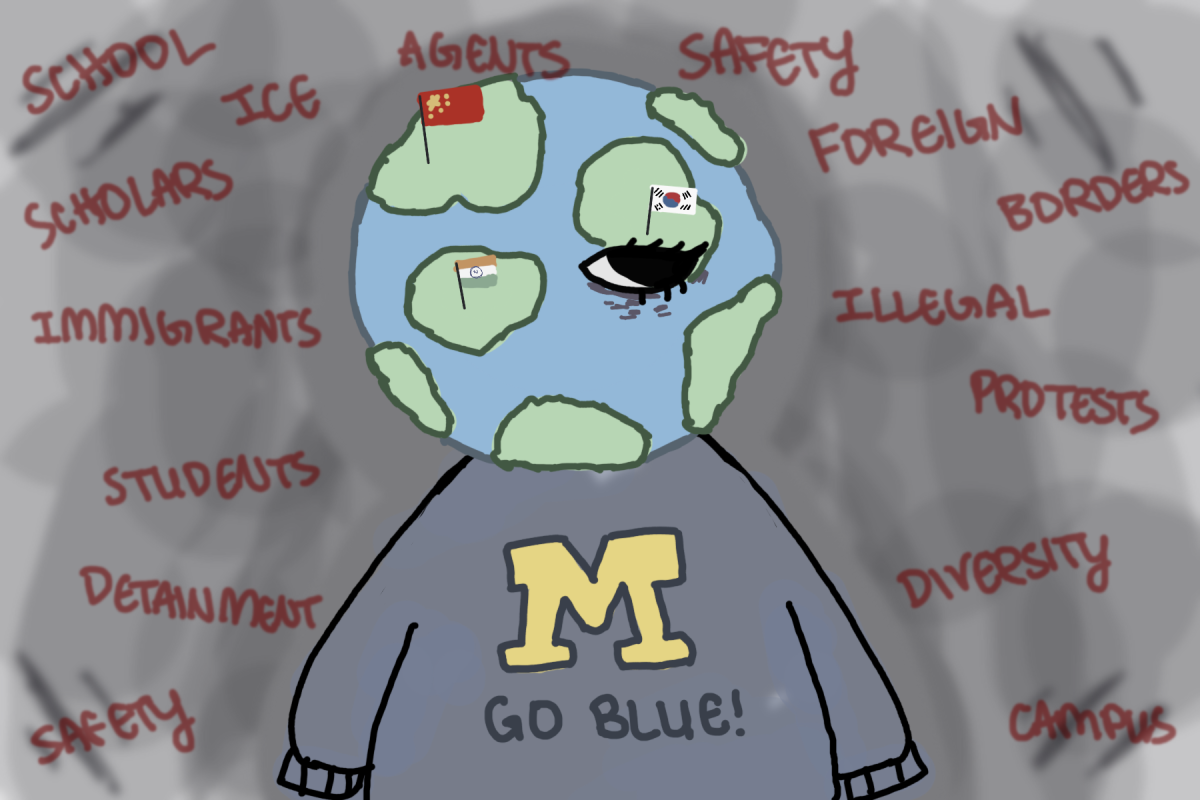
For international students, though, this isn’t just time away from home; it’s oceans away. And the mundane conversations aren’t about campus life; it’s filled with concerns about recent American Immigration and Customs Enforcement raids.
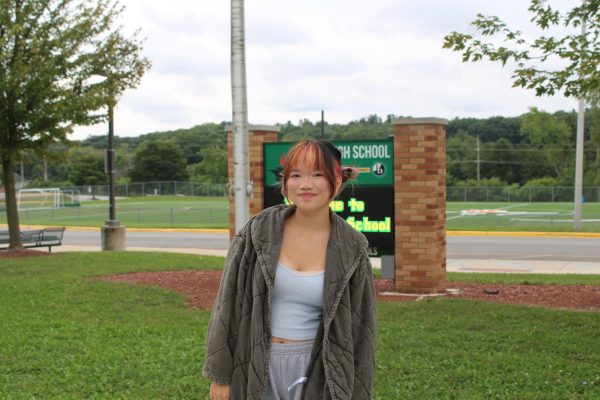
“I’ve gotten a sit down from my parents being like, if you’re going to protest, wear a mask and please don’t make it known that it’s you,” said Jane Doe, a current Korean international student at UM. “Situations like that, if something happens to me and I get deported, my family lives in Korea, but it affects my education. So, it affects my family.”
Doe, like many international students on campus, has been personally feeling the impacts of the rise in recent ICE activity. After President Trump’s reinstatement into office earlier this year, there has been a clearly stated mission for the mass deportation of undocumented immigrants.
This increase in activity has reached many colleges and universities across America alike, including the University of Michigan, which has recently fired and detailed three3 different Chinese international scholars.
“We strongly condemn any actions that seek to cause harm, threaten national security or undermine the university’s critical public mission,” the UM Public Affairs website said. “We have and will continue to cooperate with federal law enforcement in its ongoing investigation and prosecution.”
With 12,547 international students, scholars, and faculty at UM according to the 2025 UM International Center statistical report, these recent statements and actions have caused concerns amongst the UM student and faculty community.
“Any time I come across another international student the only thing to talk about is how do we avoid and stay out of trouble,” Doe said. “There’s definitely a sense of danger and anxiety with international students, but also with non-international students as well.”
In the center of this uneasiness amongst campus is a pattern of vagueness and the unknown for UM administration. For international and domestic students alike, there is an ambiguity that creates anxiety.
“At the beginning of this year, the university released [like] very useless statements about how they would react to the ICE detainments happening on campus,” said UM student Amatullah Hakim, who currently serves as the United Asian American Organizations (UAAO) co-director on campus. “Essentially, they provided no protective measures to international students in order to protect them from the actions of the government.”
Hakim, while not an international student, has still continued to feel the shift in campus with recent increases in ICE activity through her work with the UAAO. The organization is a coalition group on campus to represent other ethnic and cultural Asian groups on campus. They work together to further help change social and political issues impacting the Asian American diaspora on campus.
“Although Ann Arbor seems like a very liberal place, the people that are in charge still clearly don’t have the well-being of students in mind,” Hakim said.
These actions taken by the University of Michigan may seem new and in response to current changes in the American political climate, but many students and faculty have noticed patterns of this in the past.
“I think sometimes people use the Trump administration as an excuse for the actions of our university administration, whereas it’s very clear that the regents have always and will continue to serve their own interests regardless of who it is in the administration,” Hakim said. “Universities have the power to stand up to the face of governments and allocate the funding however they want to. It’s more so a pattern of continued action and continued repression that extends far beyond the Trump administration.”
For international students, this issue comes mainly in the resources given towards them from the administration.
“I don’t think I received any resources from them [UM administration],” said an anonymous international Chinese foreign exchange UM alumnus. “I received direct support from the professors.”
This anonymous source immigrated from China in 2019 after being admitted into UM’s secondary teaching program for a master’s degree. While they didn’t study as an undergraduate student, anonymous still raised hopes for changes in future UM resources.
“I was 27 when I was in a program, but I think it might be really hard for young adults when they are to come to a new country without any support,” Anonymous said. “I think the university needs to give them some support in how to address yourself in a new country, like some life support, financial support, and mental health support.”
One large concern for international students isn’t necessarily school itself, but what happens after. With the complications of work Visas and different biases by employers, there is an unspoken need for these resources from the UM administration.
“I know that it’s really hard for international students looking for a job in this environment,” Anonymous said. “Visa stuff has been really tough this year, so I think those are the things that students really need. I feel many international students want to get a job here, and they deserve it because they are really good students.”
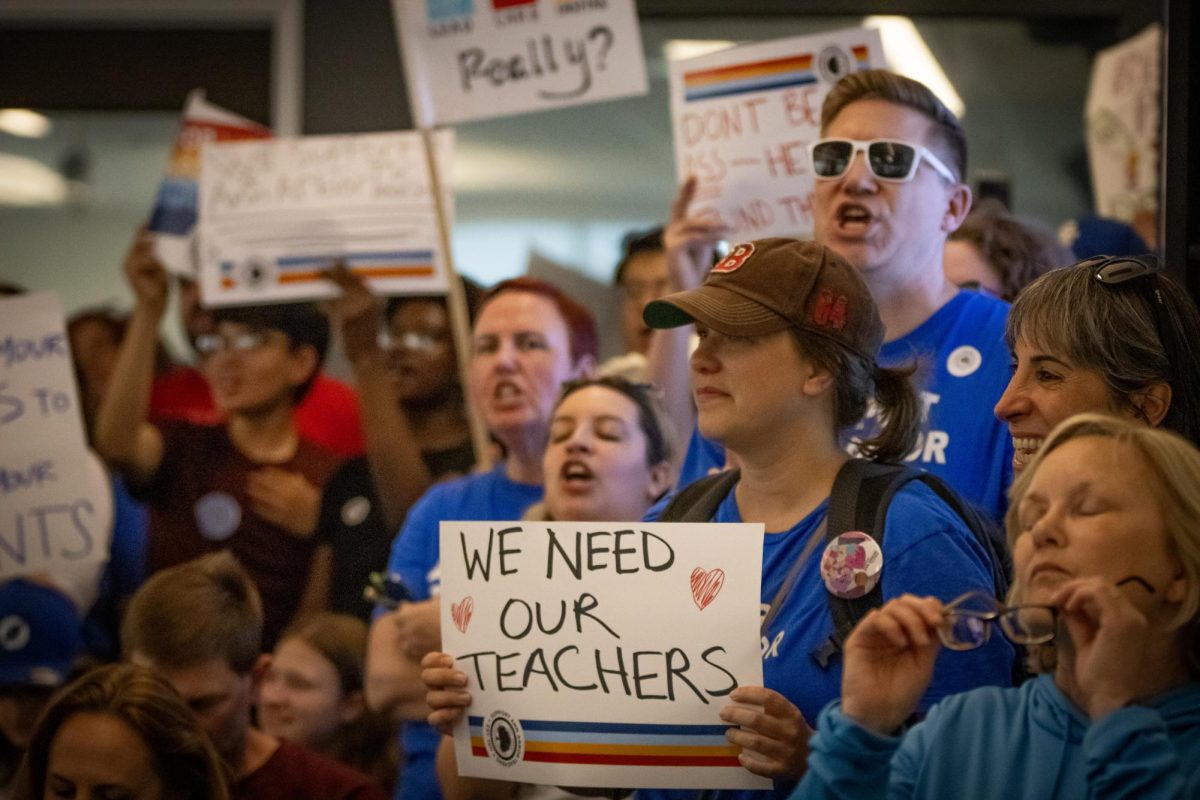
Many student organizations have recognized this imminent need for change and have been advocating for the university to take action. Some, like UAAO, have gone as far as to make official public statements condemning the university in light of the recent detainment of different Chinese scholars.
“The University has not only failed to protect its own international graduate students,” The official UAAO statement said. “But also jeopardized these scholars’ visa statuses through unjustly terminating Xu Bai, Fengfan Zhang, and Zhiyong Zhang on October 8th and enabling ICE to detain them on October 16th.”
Even with student efforts, there is still pushback from university administration. Hakim described the limits in event venues on campus, with approval needed and administrative concerns on what these events can entail.
“They love to send like a quick little email, being like you went against this policy, so here is the lawsuit,” Hakim said. “When it comes to these things, there’s honestly like little to no communication as far as I’ve noticed. I think it says a lot about what their main objective is. Not to communicate and see what our objective is, but it’s more so just to silence and repress these kinds of events as fast as possible.”
Despite the risks and pushbacks for international and domestic students, there is still a call for different students to speak up.
“If you get deported, all the work that you’ve been doing on these political issues could’ve been for nothing, but if you take that and use it wisely,” Doe said. “Then you could be someone who’s going to change the future.”