

Much of my adolescence has been lived to the soundtrack of Mitski’s discography. In retrospect, it feels as if this woman has experienced every emotion. Her ability to describe these feelings with every nuance accounted for was always remarkable to me. Her new album, “Nothing’s About to Happen to Me,” does exactly that in a striking way.
The album opens with the track “In a Lake.” This track opens on the same bluegrass-inspired note that her last album, “The Land Is Inhospitable and So Are We,” closed on. Here, Mitski sings an ode to starting over and to big cities against a gentle strum. In traditional Mitski fashion, the song suddenly and triumphantly crescendos as she sings, “And in a big city you can start over//The lights all around you the dark safe in sight.”
From this point on, the album feels like a give-and-take of hope and regret, following the erratic nature of grieving a relationship. We can see this on the second track, “Where’s My Phone?” Mitski presents a version of herself that is scatter-brained and wild. She enunciates this version of herself with a noisy, pop-rock instrumental. We can tell that she is fighting against it, but doesn’t know how. She sings “I keep thinking ‘Surely somebody will save me’//At every turn I learn that no one will.”
This idea of being alone and helpless in the fight against your own mind is sewn through this album, and can especially be seen in the fourth track, “If I Leave.” On this track, Mitski reminisces on the ache of losing someone, how they will find ways to be better off, and she will be alone with no one to validate her goodness. She sings “If I leave, somebody else will love you//But nobody else could forgive me//Quite as often as you.”
“If I Leave” is followed by the track “Dead Women”-these songs go hand in hand. In “Dead Women,” Mitski sings about the lack of autonomy she experiences when her self-perception is placed in the hands of someone else. She sings “Would you have liked me better if I’d died//So you could tell my story the way it ought to be?” The person she is singing to is under the impression that they are the final authority on who she is–an authority given by Mitski in letting them define her ‘goodness.’ “Dead Woman” almost serves as a rejection of the feelings brewed in “If I Leave,” allowing her autonomy and wholeness.
“Dead Women” is followed by three distinct tracks: “Instead of Here,” “‘l’ll Change For You,” and “Rules.” On these three tracks, Mitski goes through her final steps of the grieving process before accepting where she’s at. On “Instead of Here,” Mitski ruminates in her loneliness and turns to isolation. She sings “So excuse me, I’ll be opening my box//Of old friend misery, my secret treat//To feel like myself again.” Her isolation is reconciled with a declaration of change, sung sweetly with vocals reminiscent of Cornelia Murr, on the track “I’ll Change For You.” She almost embarrassingly pleads, “I’ll do anything//For you to love me again//If you don’t like me now//I’ll change for you.” Mitski triumphantly dives back into her past relationship, but condemns herself to detachment on “Rules.” She sings “And when I leave my body//Please pretend that you don’t see//How I’m no longer there behind my eyes.”
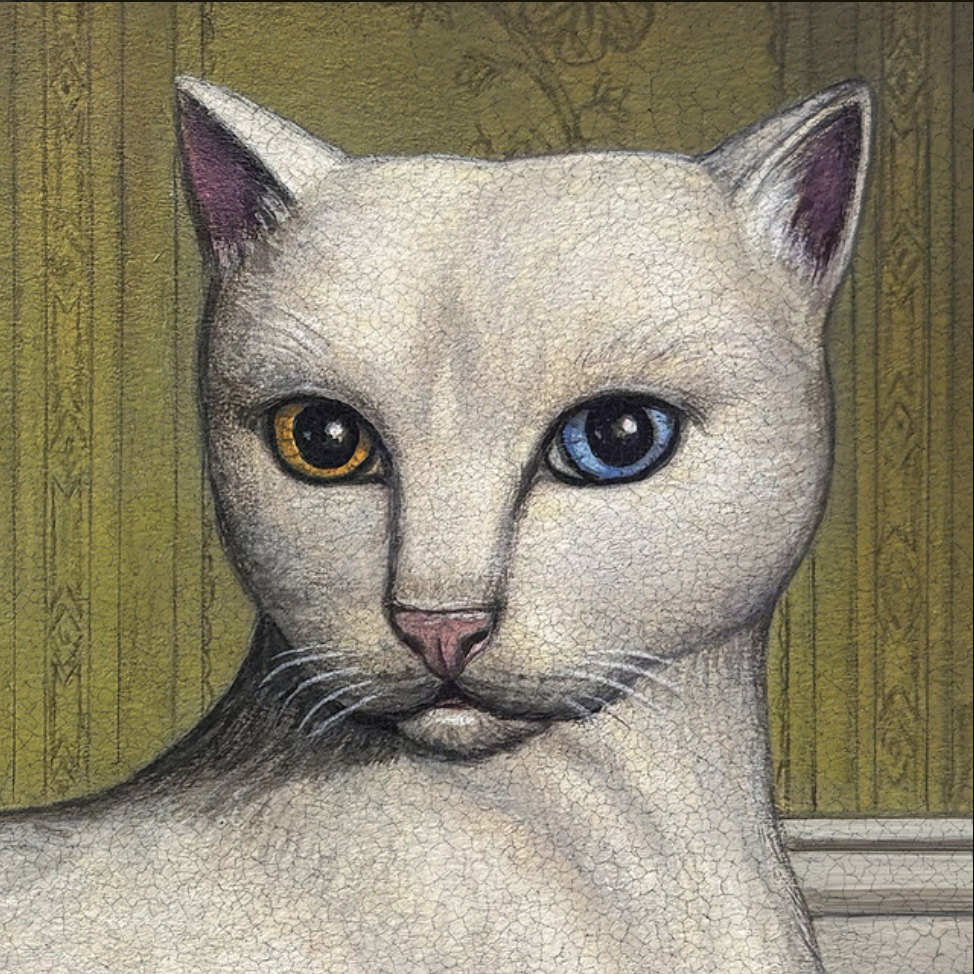
Detachment does not save her, though, and on the ninth track, “That White Cat,” we can see her coming to terms with this fact. She sings “So that white cat can kill the birds//What do you hold onto?” posing the final question of the song as a means to show how everything is impermanent, how everything will inevitably be let go. On the final track, “Lightning,” Mitski is reborn. She sings “When I die//Could I come back as the rain?//See the world again, to fall again?” In calling on death, Mitski is given an opportunity to let go, to become something formless and free. In death, she is granted release.
“Nothing’s About to Happen to Me” did so many things right. Sonically, it is varied yet somehow manages to stay cohesive in the grand scheme of the project. Combining her newer Americana sound with the fuzzy, harsh rock sound of her older work created a dynamism that suits the topic she is covering perfectly. It is a completely rounded body of work rather than just a collection of songs, which speaks volumes about her artistry. Moreso, the non-linear path to acceptance and rebirth Mitski takes throughout the record parallels real life. Going from the biting isolation of “Instead of Here” to the pure conviction to love and change on “I’ll Change for You” to a lucid acceptance of what was lost on “Lightning” shows how relationships are never clean cut. She is unafraid to bear her flaws on this album, and that is deeply admirable.
Overall, I would give this album four out of five stars. Its lyricism and production are incredible, but that is to be expected for any Mitski album. I would’ve hoped for something new rather than a callback to her earlier work. That being said, even while revisiting familiar ground, Mitski manages to capture the same intensity of the ache her previous records have brought. While it did not reinvent the wheel, it is still a deeply memorable and meaningful addition to her discography. You can listen to “Nothing’s About to Happen to Me” on Spotify or Apple Music.