
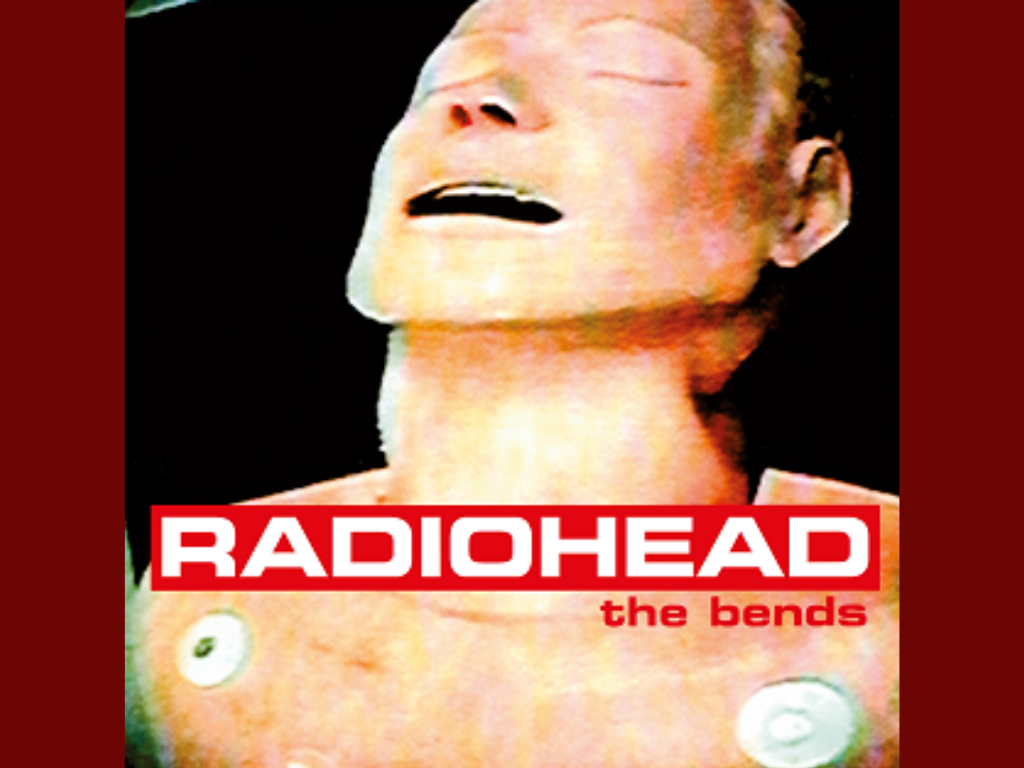
31 years ago, 90’s art rock experimental band Radiohead released their landmark second album: The Bends. While it’s tough competition to be named the best technical album of theirs, The Bends is certainly the most accessible. It’s a hard hitting, cathartic listen that reflects the alternative rock genre conventions of its time while giving the listener a preview of their later more electronic sound.
There’s a strong Pixies influence throughout the album, seen especially in their fluctuating dynamics, often leading with a soft verse into a loud and raw chorus. This technique has been used historically within rock and roll, primarily to shock listeners through a dramatic and unexpected shift in tone and often tempo. Examples can be seen on tracks like “Bones,” “Black Star,” and “Sulk,” where there is a sharp change in energy from leading verse to heavy chorus, adding a sense of novelty to the song.
While their use of dynamics is nothing new, front man Thom Yorke’s earnest and cerebral storytelling within his lyrics set Radiohead apart from their contemporaries. Yorke leaves the audience with an intentionally limited perspective, allowing for many of the narratives to be up to the listener’s interpretation. A great example of this is the album’s seventh track “Just,” where the vague yet accusatory repeating lyrics “you do it to yourself” are unclear on if the sentiment is reflective of the writer’s own experience—looking back on past mistakes—or critical of another target.
It’s the more innovative and exploratory tracks on The Bends that give us a glimpse into the Radiohead we know today. Their opening song “Planet Telex” is both a personal favorite of mine and a clear turning point towards their more experimental albums like OK Computer, released only two years later. The heavily warped guitar, wall of sound layering, and drum loop all hint towards the band’s transition from the grunge stylings seen primarily in The Bends—and their debut; Pablo Honey—into their later more electronic sound.
We know now that Radiohead would go on to grow into their unique sound through experimentation, while still keeping the genuine and raw energy highlighted within The Bends. The album is of its time, that’s clear, but its powerful emotional energy continues to resonate with audiences over 30 years later.