
Korean restaurant Bewon has recently inaugurated Chinese-Korean dishes to its menu: chicken tangsuyuk, jjajangbap and jjamppongbap. In the new items, I hoped to discover a memory of silky Chinese zhá jìang miàn sauce in the jjajangbap, and curious to find what Bewon’s flavor of fusion cuisine tastes like.
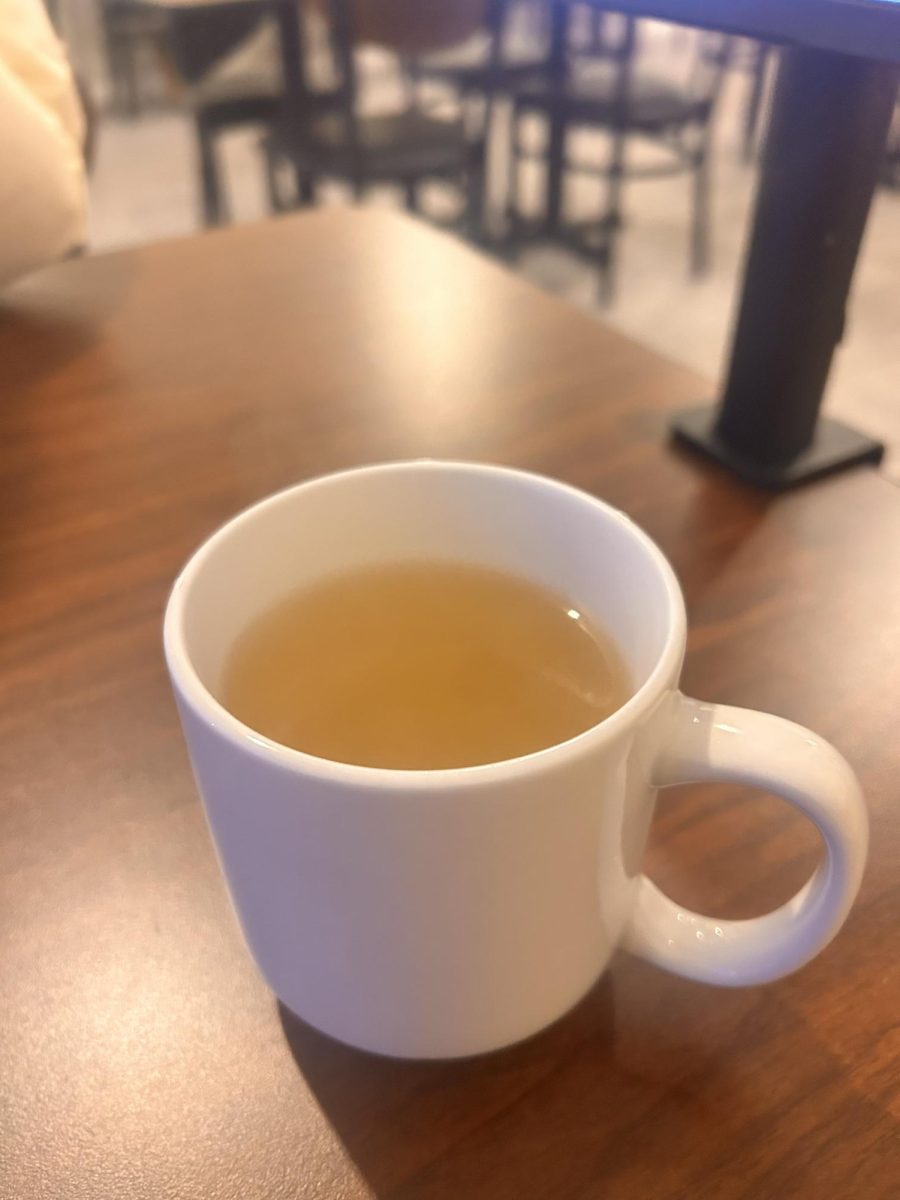
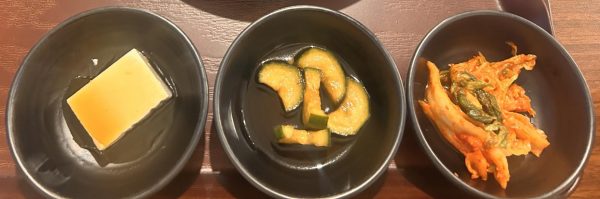
Cold water is automatically served after we seated ourselves in its open seating system, but hot barley tea is given without charge if requested. Banchans were served with every dish except the chicken tangsuyuk, the side characters of refreshing tofu, soy sauce cucumber salads and tangy kimchi.
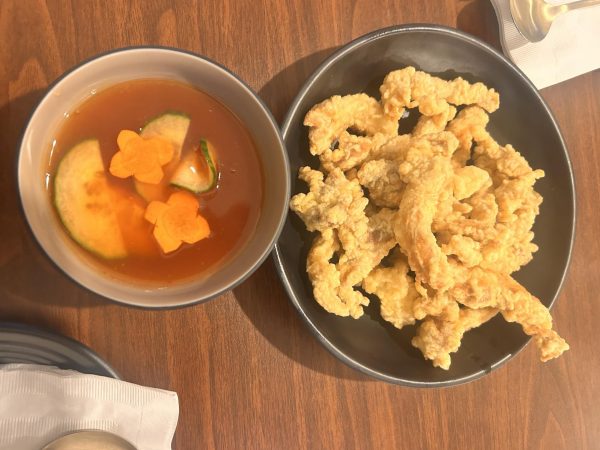
We first were served the chicken tangsuyuk ($18.95), a fried meat served with sweet-and-sour sauce. The chicken had a starchy crispiness to it and was thoroughly cooked. A brilliant accompaniment was serving the sauce on the side of the chicken to maintain its fresh texture and enhanced the chewing experience. The sauce itself was a tart jam of vinegar with cucumbers and flower-cut carrots.
The Chinese parallels to this are táng cù pái gǔ (糖醋排骨) and guō baō ròu (鍋包肉). Bewon’s interpretation is not a mirrored replica, stirring into how different cultures rephrase a certain dish.
Guō baō ròu is a Northern-Chinese dish, double-fried pork loins in a sweet-and-sour sauce. It is scrunched with the familiar aerated bite I’ve awed over in my grandparents’ dinner table, the takeout steaming in styrofoam baskets.
The next dish we were served was the jjajangbap ($14.95), a dome of rice blanketed underneath a scallion omelette, moating the black bean sauce. The egg was buttery and had a velvety cape to the dish, while the sauce had a molasses-slush with crunchy shards of onion.
This dish is represented in Chinese cuisine through zhá jìang miàn (炸酱面), noodles coated in a decadent black bean sauce. A popular distinction between the Chinese and Korean establishments of the dish is that the former has a savory approach, while the latter incorporates more saccharine elements. However, the jjajangbap was both between the salted and candied realm, resoundingly nostalgic.
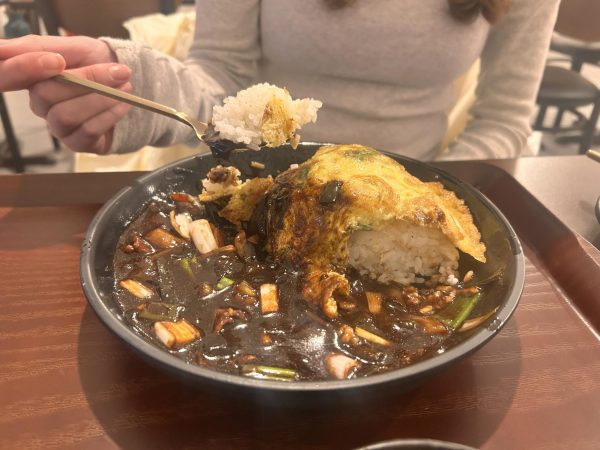
Although in a different arrangement, I was able to return to those meals, where I sat criss-crossed and elbows on a scarred circular table. Arguably, the sauce had a rare ingredient of nostalgia that could be experienced by any customer.
In midsummer days, my lǎo lǎo (姥姥) would embrace brimmed bowls of zhá jìang miàn, the soupy noodles with pudding-like black bean sauce and clippings of sliced cucumbers. It’s a meal I’ve consumed through memory before taste, licking the bowl and chopsticks clean.
The final dish served was the jjamppongbap ($17.95), a spicy, seafood noodle soup. While ordering, the dish was offered with either seafood, pork or both. We ultimately decided on seafood, which offered an exhibition of sliced onions, inch-cut scallions, briney mussels, round curls of shrimp and bouncy hoops of squid. The broth was swimming with boiled kimchi which created a pleasant, warm mouthfeel — the jjamppongbap savored like a stewy chimney.
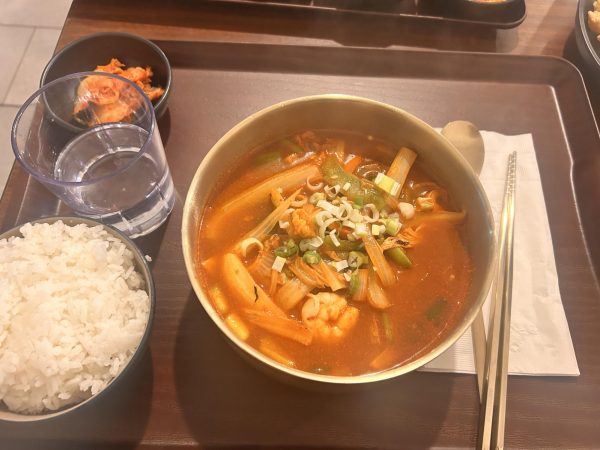
There were also slippery glass noodles twirled together that added an engaging texture to the dish. However, I would have liked to see more of that element be present, especially towards the last few slurps.
The debut of the chicken tangsuyuk, jjajangbap and jjamppongbap as a set was clever, all complimenting each flavors’ demeanor and representing the Chinese-Korean counterpart of Bewon’s evolving menu. As a person of Chinese descent, it was familiar to visit the trinity of the Chinese-Korean tastebuds. And as a customer, I’m looking forward to what the budding Bewon serves to the table next.