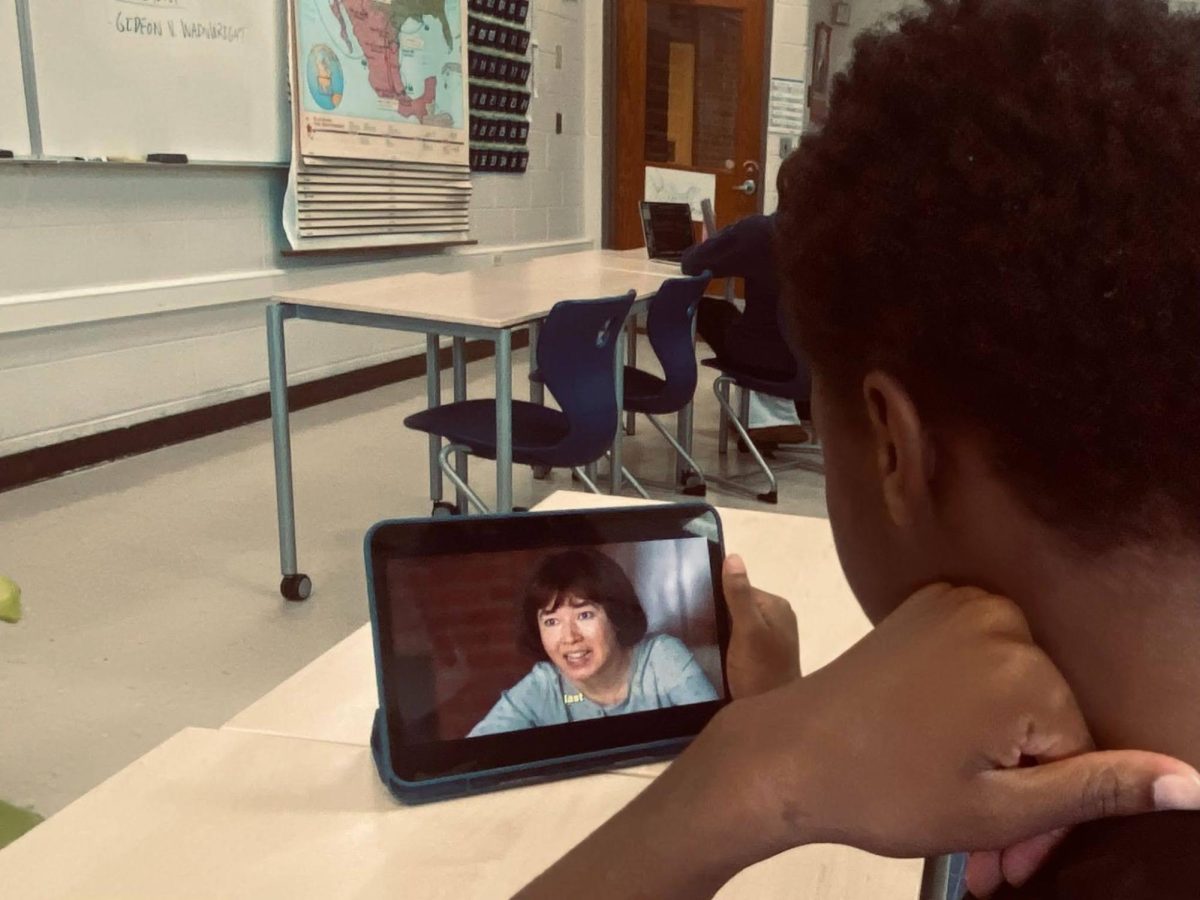


“A Ripple in Ann Arbor” is a poignantly vulnerable and raw documentary about the city, and is a crucial piece of media in Ann Arbor history. Created by filmmaker Aliyah Mitchell in partnership with the Ann Arbor District Library, the film tells the story of a search for a serial rapist in Ann Arbor from 1990 to 1994, and the poor and damaging tactics that were used throughout the investigation.
“A lot of the adults I talked to didn’t know this had happened as well,” said Huron alumn William Epps, who did camera operation for the project. “That doesn’t even sound like something that could occur.”
Ann Arbor has had a reputation for being relatively liberal and safe for decades, which is what made this case all the more shocking. Ann Arbor police officers had a sense of security living in a place where nothing really happened, and when something did, they went to extremes to get it back. The extremes taken were arguably racially charged, as the profile given was that of a Black man. The distinction of ‘profile’ here is crucial; it was a vague description, not an illustration of a suspect. It was for this reason that the police force enforced dragnetting.
Dragnetting is a law enforcement tactic that employs coordinated measures in order to apprehend suspects. In this case, it involved DNA testing of large numbers of Black men within the city, stripping them of autonomy and safety. This treatment was rationalized by saying it was a means for these men to rule themselves out. Innocent until proven guilty did not exist for them. More than this, the police force would surveil Black teenagers when the profile stated the suspect was between 25-35, women when the profile was that of a man. The safety of the city was put at the expense of the Black community’s humanity.
“It was such a graphic and aggressive story,” Epps said. “Hearing that and knowing it was recent, like my parents were alive then, and to know that it happened in a town I’m so familiar with was definitely uncomfortable to hear.”
Despite the intense nature of the subject matter, Mitchell handled the telling of this story with genuine grace and honor. The story is told by a majority of firsthand interviews, allowing those affected to speak for themselves. As well as this, Mitchell uses a multi-media element in order to put emotion and imagery behind the interviewee’s stories. The audience sees illustrations, old photos and videos as well as documents from the case. Not only does this draw the audience in, but it also adds depth to the emotional experience, reshaping how viewers see the city.
“To engage with the storymaking process and learn these things about the city, on top of being able to ask questions to the adults involved in the process, definitely changed my view on Ann Arbor,” Epps said. “It’s not as perfect as it comes off.”
As a community, it is our responsibility to learn and understand the history of our city, no matter how dark it may be. Allowing what has happened to fade into myth ignores the fact that the past ultimately shapes the future–it always ripples outward. You can watch “A Ripple in Ann Arbor” on the Ann Arbor District Library website.