
I sit cross-legged on the floor, photo albums scattered around me, pages bending at the spine from years of being held, remembered. My mom flips through them like they’re proof of some sacred thing (see: life before her kids grew up). My grandparents laugh out of frozen frames, my aunts smile for a picture looking so young they’re nearly unrecognizable, my sister’s baby photos make an occasional appearance.
But I’m not there.
It’s not because I had no childhood. It’s because mine was never meant to be held. I grew up in front of an iPhone camera that never really stopped watching. Every moment was documented, stored, uploaded, yet nowhere I can physically turn to, nothing I can hold in my hands and feel existed.
It’s not just me. It’s a late Gen Z, Gen Alpha kind of absence — one that doesn’t look much like loss at first, because nothing is actually missing. If anything, there’s too much. Then, every photo was a product of careful consideration, out of fear of losing film. Now, every single person in my family is programmed to ignore the storage full icons every time we open our phones. The issue here, however, isn’t storage; it’s the fact that it’s always full.
Over the past decade, childhood has become one of the most documented experiences in human history. Parents now take thousands of photos and videos of their children each year, many of which are stored indefinitely or shared across platforms. What was once private — tantrums, milestones, awkward phases — is increasingly public, permanent, and searchable.
The shift has a name: “sharenting,” the practice of parents documenting and sharing their children’s lives online. By the time a child reaches adolescence, they may already have a digital footprint stretching back to infancy, built without their awareness or consent. The impact, however, doesn’t stop at privacy.
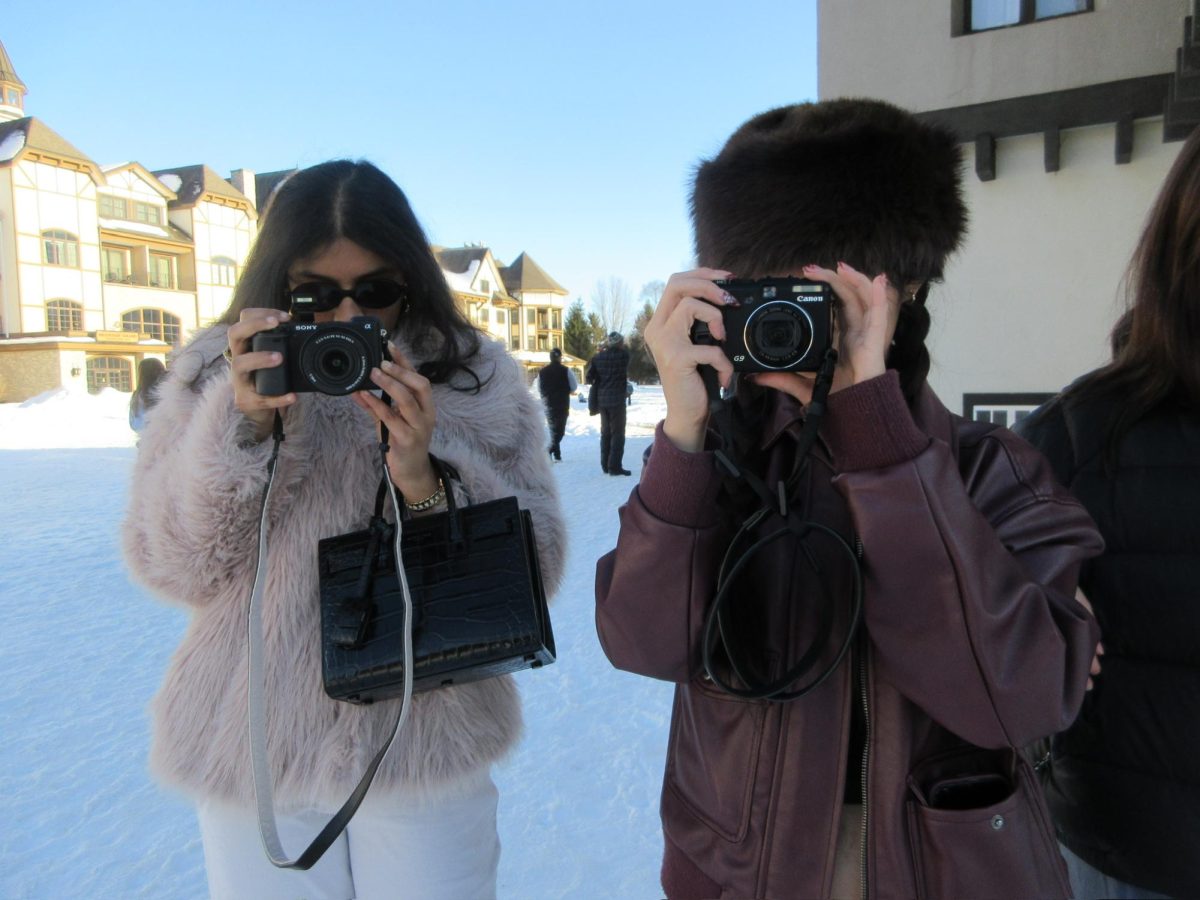
Psychologists have a name for what happens when we constantly reach for our cameras: the “photo-taking impairment effect.” In one study, participants on a museum tour who took photos of each object as a whole remembered less details than those who observed them, showing that how the basics of our memory is essentially being reworked because of all the photos we take.
According to National Geographic, memory doesn’t work like a video you can pause and replay on command. It’s an active, biological process shaped by different parts of the brain working together, and is especially sensitive to attention and emotional engagement, factors that could be disrupted when the focus is more on photographing rather than experiencing the moment.
Though maybe you’re photographing so that you don’t forget the moment in the first place — because, of course, we hardly have the capability to remember every single moment we experience. There’s a difference between remembering your birthday and having 300 nearly identical photos of it. One lives in your body — in the feeling of the room and the voices, and the other lives in a cloud, waiting to be revisited but rarely actually revisited.
There’s also the question of identity — who gets to tell your story, and when. To me, adolescence means messy, private, and full of trial and error, where you can be multiple versions of yourself before deciding who you want to be. But for many now, that process happens with an audience, or at least a record, which disrupts their natural exploration, turning it into something more curated — but not by them.
I’m not telling you to stop taking photos; that wouldn’t make sense. Photos still undoubtedly matter; they connect us to people, to places, to different versions of ourselves we might otherwise lose, and having them always at reach can be great. But someday, we might go looking for proof that we were there, not just in images or data, but in the way something felt. And, personally, it would be very nice if we didn’t have to rely on a screen to find it.