
What being Indian means to me
The smell of ghee and cardamom filled the house while my mom hurried from room to room, stopping every few minutes to kneel on the floor and carefully sprinkle colored powder into a rangoli by the front door. Nearby, rows of small metal diyas flickered along the windowsill. I remember hovering around the kitchen, eyeing the trays of faral—homemade Diwali snacks—while my dad adjusted the wick of a diya that had gone out. Outside it was just another cold evening in Ypsilanti, but inside the house everything glowed gold. It was Diwali.
Growing up in Ypsilanti, my parents made sure I stayed connected to our culture in small but important ways. They were involved in the Marathi Mandal, which meant that every so often I would find myself surrounded by families who looked like mine and spoke the same language my parents did. Our home was also full of celebrations—Diwali, Raksha Bandhan, poojas, and other Hindu rituals.
I didn’t always understand what was going on, but I remember the flickering lights reflecting off brass lamps, the steady rhythm of prayers my parents recited, and plates of sweets like laddoos and barfi that appeared at the end of every ceremony. More than anything, I could see how much it mattered to my parents. Even thousands of miles away from India, they put care into every detail, determined to keep these traditions alive.
When the festivals ended, the stories continued. I spent hours flipping through books about Indian folklore and mythology. I laughed at Tenali Raman’s tricks, watched in awe as Birbal outwitted everyone in 100 Wise Tales of Akbar and Birbal, and read picture books like Stories from Panchatantra and My First Stories from the Ramayan.
But my absolute favorite story was about Dashavatara (दशावतार), the ten avatars of the god Vishnu.
Each incarnation descends to Earth in a different form to restore dharma (धर्म), or cosmic order, whenever evil prevails. I loved imagining Matsya (मत्स्य), the Fish, saving the world from a great flood; Varaha (वराह), the Boar, defeating a demon while lifting the Earth on his tusks; and especially Narasimha (नरसिंह), the half-man, half-lion who tore apart a seemingly invincible demon king.
Through those stories, India felt close to me, even from thousands of miles away.
As I got older, though, those traditions slowly became less central to my life. The Marathi Mandal gatherings happened less often, and weekends that had once been filled with cultural events became occupied by homework, sports, and time with friends.
One year during Raksha Bandhan—a holiday where sisters tie a thread bracelet called a rakhi on their brothers’ wrists to symbolize protection and family—I remember sitting at the table waiting while my sister refused to come downstairs. Normally she would tie the rakhi while my parents watched and took pictures, but that year she shrugged it off as pointless.
I remember sitting there with the bracelet in front of me, suddenly realizing how fragile these traditions were. Something that had once felt permanent could disappear if we simply stopped doing it.
Even so, there were parts of my Indian identity that always felt just out of reach. One of the clearest was language.
Growing up in an Indian household, Marathi (मराठी) was always around me. My parents spoke it on the phone with relatives, used it when talking to each other, and occasionally slipped it into conversations with me. But whenever I tried to speak it myself, the words felt clunky and awkward, like they didn’t quite belong in my mouth.
Still, it wasn’t completely foreign to me. Over time, I picked up simple phrases without even trying. If my mom called out from another room telling me to come downstairs or asking me to bring something, I understood instantly. Those small moments made Marathi feel almost like a second language: one I could hear and recognize, but never fully speak.
I remember one afternoon sitting with my cousins while they switched effortlessly between Marathi, Hindi, and English in the same conversation. At one point someone asked me something in Marathi, and the whole group paused while I tried to piece together a response. When I finally managed a few hesitant words, my cousins burst into laughter, teasing me about my American accent and the way I pronounced everything slightly wrong.
I laughed along with them, but the moment stuck with me. It was a strange feeling to be surrounded by family yet feel slightly outside the conversation.
That feeling wasn’t entirely new. I remember a kid in elementary school once asking me if I could speak “Indian.” I wasn’t offended, as he was just a kid who didn’t know better. But when I tried to answer, I realized how uncomfortable I felt admitting that I couldn’t really speak the language my parents used every day.
Eventually, my mom enrolled me in a Marathi Shala (शाळा), hoping I would finally pick up the language.
I didn’t.
The only phrase I truly remember learning was:
“Majhi bahin magar ahe.”
My sister is a crocodile.
Safe to say, that didn’t get me very far in conversations with my family.
Even with all the stories and traditions I grew up with, language remained the one piece that never fully clicked for me. Marathi was always there in the background of my life. It was familiar enough to recognize, but just distant enough to remind me that some parts of identity aren’t inherited as easily as others.
The airport doors slid open and the humidity hit me instantly, thick and warm against my skin. Inside, the terminal buzzed with overlapping conversations, the clatter of luggage wheels, and the constant movement of people squeezing through narrow spaces.
Seven years had passed since my last visit, but the intensity of everything still caught me off guard.
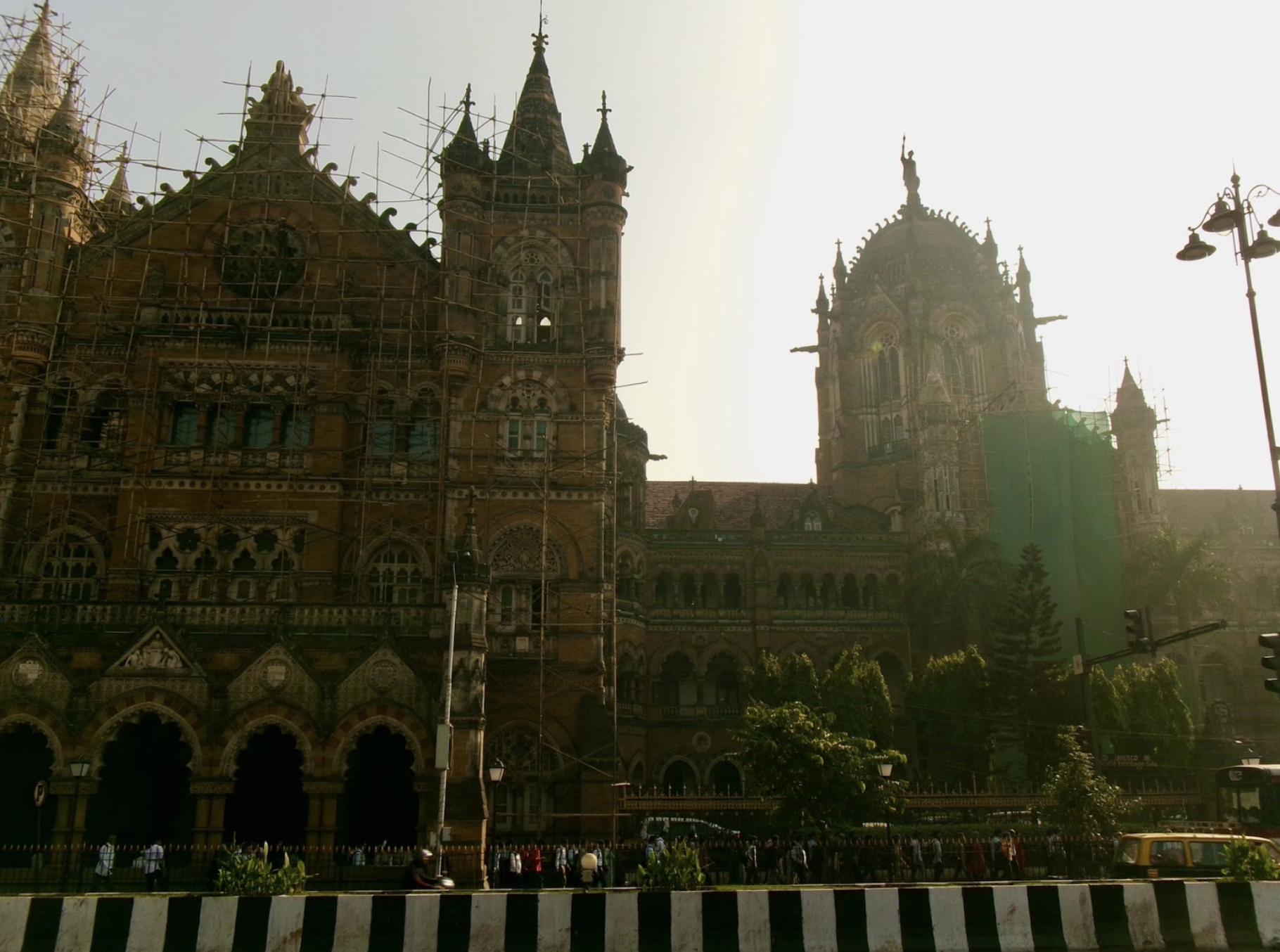
Once we stepped outside, the noise doubled. Rickshaws packed the road bumper to bumper, barely moving as horns blared in every direction. Motorbikes wove through impossible gaps in traffic while roadside vendors called out to us in Marathi.
Eventually we squeezed into a taxi and merged into the slow crawl of traffic. With nowhere to go for hours, I did what I usually do when I’m bored.
I pulled out my phone and started scrolling.
The first post was a polished travel reel: sweeping drone shots of Goa’s beaches, misty hills in Kerala, and perfectly framed views of New Delhi’s monuments.
I glanced out the taxi window at the rickshaws, the street vendors, and the endless traffic.
The two images didn’t quite line up.
A few scrolls later, another video popped up. An influencer was filming a series where they asked ChatGPT to randomly choose a place in the world, then rated the homes there. When the generator landed on India, the influencer immediately skipped it.
“Oh heck nah,” the text flashed across the screen.
The comment section looked like a battlefield. Some users pushed back, criticizing the joke. Others laughed along, agreeing that India was somehow “too chaotic” or “too much.”
Reading through it, I felt a strange mix of frustration and sadness.
The chaos outside the taxi window, the horns, the crowds, the movement. That was real. But online, it had been flattened into a stereotype: either exaggerated into something messy and overwhelming or edited into something perfectly scenic and exotic.
Neither version matched what I was actually seeing.
Growing up, I thought being Indian meant doing everything correctly: celebrating every festival, speaking Marathi fluently, knowing every story my parents had grown up with. When those things started to fade away—when the festivals didn’t occur, when my Marathi never improved, when even small traditions like Raksha Bandhan began to feel optional—it seemed like something essential was being lost.
But identity doesn’t disappear that easily.
The stories I read as a kid, the jokes of Tenali Raman, the prayers resonating through the house during Diwali, my mom insisting I attend Marathi Shala. None of those things defined my identity on their own. Yet each of them left something behind.
I may not celebrate every festival the way my parents once did, and my Marathi still comes out incomplete. But those traditions were never meant to be a checklist. They were traces—small pieces of history and culture that settled quietly into my life. And over time, those traces became something harder to define, but impossible to lose.
They became the way I understand what it means to be Indian.
Your contribution will support the student journalists of Huron High School, help us to offer scholarships, cover our annual website hosting costs, and most importantly, allow us to keep recording history.
Gopal Kamat • Mar 23, 2026 at 7:55 pm
Enjoyed reading the article, Ishaan. Well-articulated and thoughtfully written.