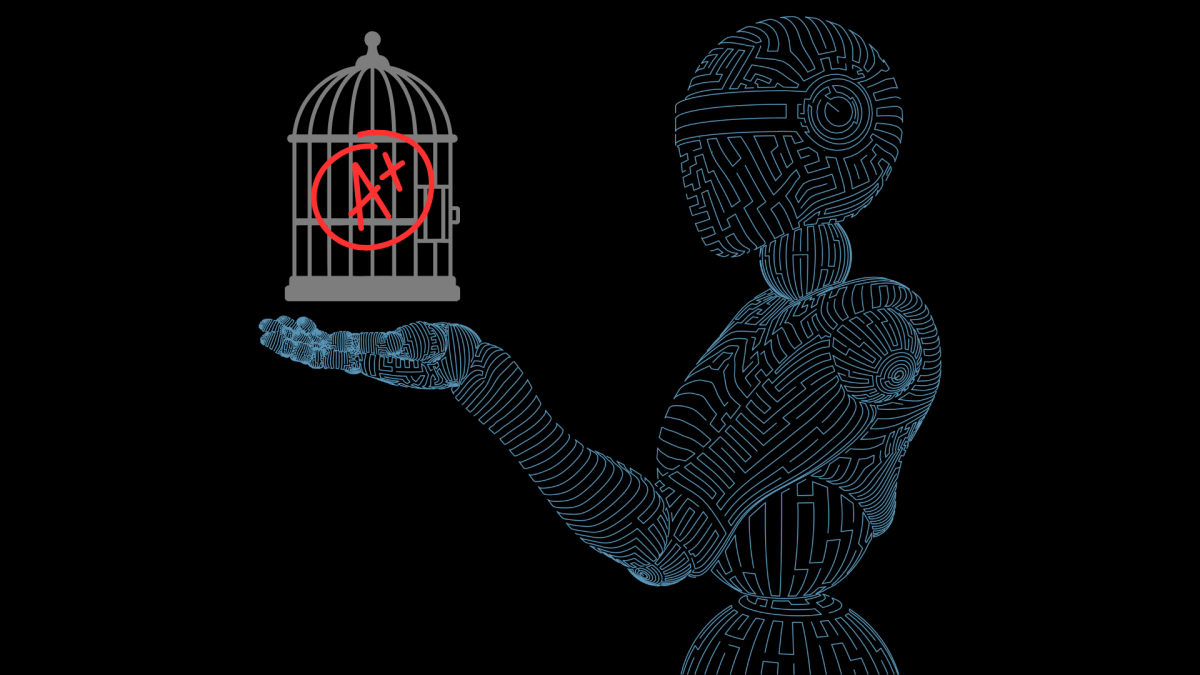


Intelligence no longer has meaning. And it is searching for it in the nearest lost-and-found: an AP Precalculus test as the systemic unit of one’s intellectual property, the list of curves and wrinkles on a brain’s rugged terrain. It’s found that “smartness” is either genetically bestowed or gifted in the method of grunt work. But from this location, the forecast is cloudy on what the traditional characters of intelligence loyally are.
Witty. Astute. Sharp. Beneath the overarching terms of intelligence, it fogs a puddle of meaning everyone subconsciously wields in their own verdicts. What we deem as intelligence can live alongside what we deem as stupidity; two contrasting concepts can be true at the same time. And more often than not, this is an equilibrium established in most people.
Intelligence is also diverged into two separate classifications: Intelligence Quotient (IQ) and Emotional Quotient (EQ). IQ involves logical and critical-thinking to complete more cognitive and problem-solving functions. In juxtaposition, EQ is the management and regulation of one’s own emotions and others’.
There are ranges of how these two rubrics can collide with each other, but both fabricate what people may blanket in an isolated definition of intelligence. What is not commonly recognized is that intelligence is rarely singular — it has a plural meaning that instantaneously evolves from location to time period to culture.
As the study of what intelligence truly is persists, the conclusion people can begin to squint at is what the ultimate ambition is. It can be significant to choose the “idiotic” alternative and become detached from regimented squares. When we cannot find placeholder meanings in shallow lost-and-founds, the hardest truth is that we do not need to always be intelligent.