
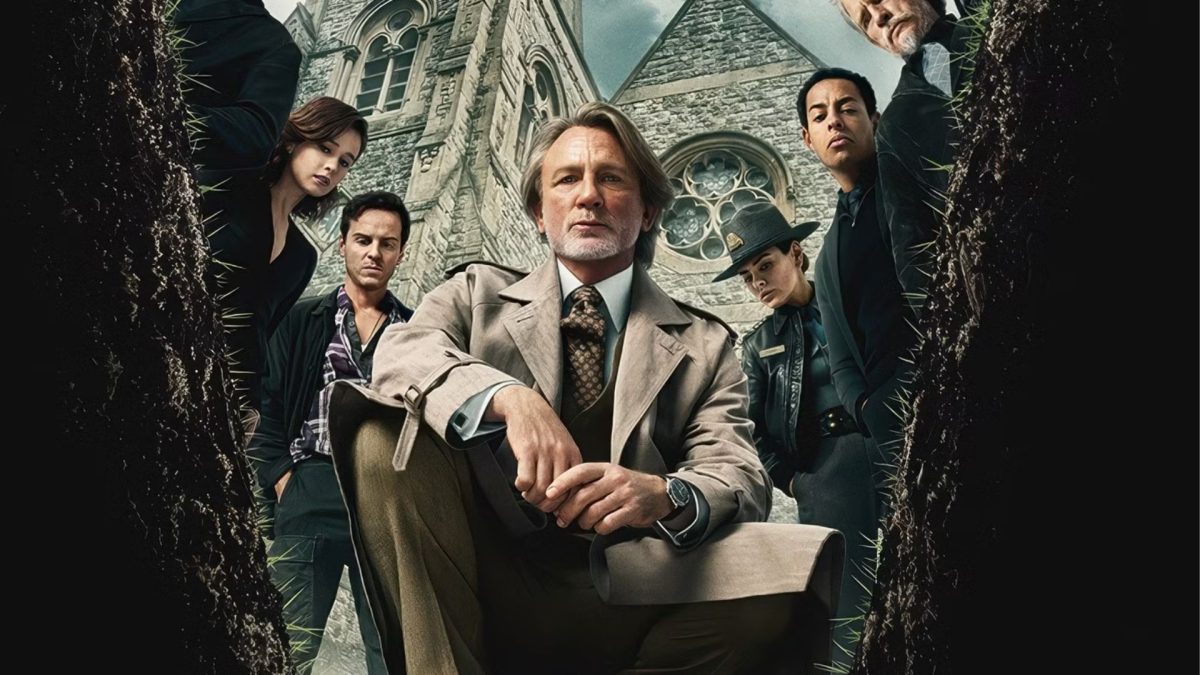
The church bells echoed through a quiet upstate New York town, and inside the parish, tension builds under the stained glass. “Wake Up Dead Man,” the third “Knives Out” movie, finally brings back that edge-of-your-seat feeling without losing its sense of humor. The Monsignor runs the parish like a general, strict and unyielding, until Father Jud arrives, trying to bring some warmth and calm. Into that rigid world comes Father Jud, a younger, gentler priest who believes faith should feel human, not fear-driven. Their quiet power struggle simmers beneath the surface until the Monsignor is suddenly found dead. The church’s deepest secrets unravel, accusations fly, egos clash, and panic spreads. Benoit Blanc steps in, but this time, the story lingers with Jud, making you care about them in a way the last two movies never quite managed.
For once, Blanc isn’t the whole show. He is still critical, don’t worry, but this is Jud’s story, and that shift brings a new light to the murder mystery genre.
Jud, the new priest, isn’t your typical “good guy.” He’s layered; wrestling with anger, trying to do better, and surrounded by people who seem determined to push his buttons. You can feel him always teetering on the edge, which makes him more believable than most heroes. When the Monsignor is killed, and the suspicion falls on Jud, the tension isn’t just movie drama; it becomes personal.
Holding off on Blanc’s entrance is a smart move. Instead of jumping straight into detective mode, the film lets you sit with the mess: feel the tension, see the cracks in the church community. By the time Blanc finally arrives, you already understand why almost anyone could have wanted the Monsignor out of the picture.
The first “Knives Out” was set in a dysfunctional wealthy family, “Glass Onion” with tech billionaires, but sometimes felt like it was working overtime to prove how clueless its characters were.
This movie goes much deeper, exploring how religion can become a tool of control. It never mocks faith, but it shows how a leader can twist it to hold power. The Monsignor isn’t just harsh; he’s calculated, using shame and fear to keep everyone in check. The people around him aren’t villains; they’re just vulnerable, searching for belonging or answers, and easy to sway.
What makes it hit harder than the other movies is that the church isn’t the background. It affects everything: how people act, what they’re willing to hide, what they’re scared of, and what they think being “good” even means.
Blanc is still himself, but he feels different this time. He’s not just there to poke fun or show off; Jud’s presence changes the whole energy.
Blanc is all about the hunt, cracking people’s stories, always pressing for the truth. Jud, however, wants to know what’s underneath, what someone is trying to protect, not just what they’re hiding. When they team up, the mystery feels less like a game and more like a real search for answers. Playing the “faith vs science” where one side is portrayed as stupid. Blanc respects Jud even if he doesn’t fully agree with him. Jud respects Blanc even when Banc is intense. Their conversations feel like two real adults trying to figure something out, not like the movie is forcing a debate.
It finally feels like a real mystery again. Where Glass Onion leaned on style and jokes, this one builds real suspicion and raises the stakes, mainly because you actually worry about what might happen to Jud.
“Wake Up Dead Man,” is the best Knives Out movie at the moment. It has the strongest side character, the most meaningful setting, and the best character dynamic in the series. It still gives you the twists and the entertainment you want, but it doesn’t feel like it’s trying to go viral the whole time. It’s smarter, darker, and more grounded than Glass Onion, and it has more going on emotionally than the first movie without losing the fun.