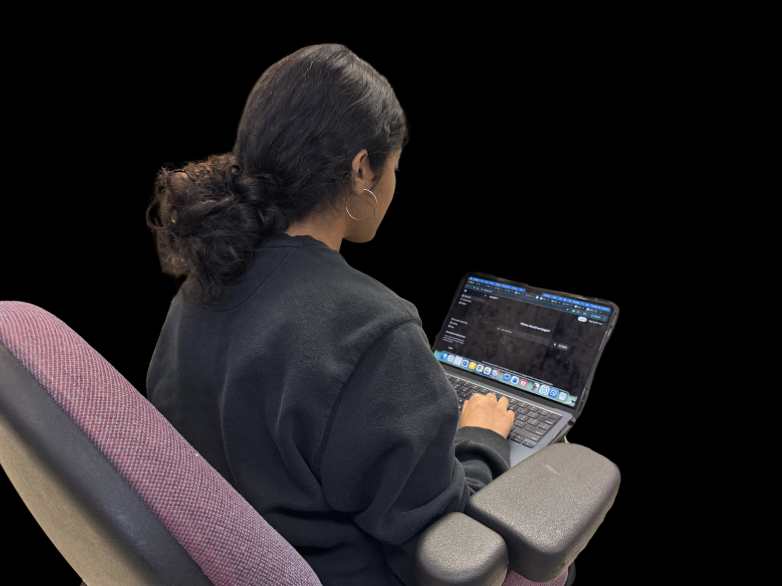


When I think about what “home” means, I do not picture a flag or a map. I see the street in Ann Arbor where we live, the DJ Bakery where we buy our fresh donuts, Huron High School where I push past the slow-moving traffic, and Gallup Park where I learned to ride a bike. What I do not usually say is that on paper, I am a temporary visitor in the only country I remember. I came to the United States from India when I was four years old, and for the past decade and a half, my family has been stuck in the slowest line imaginable: the employment-based green card backlog.
To understand this limbo, you need to know how the system works. Each year, about 140,000 employment-based green cards are available for workers and their families, a number unchanged since 1990, even as demand has soared. The H-1B program acts as a temporary bridge, letting U.S. employers hire specialized foreign workers while they seek permanent residency. On paper, you work on an H-1B, your company sponsors you, and you eventually get a green card. In reality, for people from countries like India or China, the journey is far longer due to a rule that no country can receive more than 7% of the total green cards each year. This cap, intended to be fair, creates huge backlogs for high-demand countries. New Indian and Chinese applicants can expect years-long waits. Those years-long waits are my childhood. They are my parents’ 30s and 40s. They shape how I think about my whole future.
My family’s story fits this pattern almost too perfectly. My dad first came to the United States on an H-1B visa to work in a job that required his specialized skills. Around 2014, when I was still in elementary school, my dad’s employer sponsored our green card application. At the time, we were told it could take several years, but that the process was moving. A decade later, we are still waiting. It’s estimated that I might get my green card around 2030, but it’s not guaranteed; if the backlog grows, it could be even later. That means I will probably graduate high school, go to college, and become an adult in a country that still has me labeled as a temporary dependent whose right to stay here is tied to my father’s job.
The system doesn’t just slow us down; it shapes every choice my parents make, tying our fate to the willingness of a single employer to keep handling endless paperwork. My dad has had to walk away from higher-paying jobs because those companies wouldn’t sponsor his H-1B visa or support our green card process, not for lack of options, but because our legal status depends on loyalty to one company. Economists and journalists call this “job lock,” in which skilled immigrants are too afraid to move or pursue better opportunities because their entire lives are tied to a specific employer. For us, job lock isn’t just a headline; it’s the moment my parents looked away from a better salary and towards my sister and me, deciding they couldn’t risk what we’d been pushing so hard for. In theory, immigration laws are meant to attract talent, but for so many families like mine, they end up trapping us instead.
On top of it all, there’s the constant, background worry that comes with being officially temporary: after finally buying a house, a small voice wonders, “What if we have to leave?” Every trip abroad to see family means another anxious visa stamping, knowing that a single consular officer’s decision could erase everything we’ve built. Recent news tells of tech companies warning H-1B employees not to travel due to stricter rules and increased scrutiny, and while those stories mention Silicon Valley, they’re about us too. Children of H-1B workers are especially vulnerable in this system. As H-4 dependents, we are legally tied to our parents’ status, and under current law, we “age out” at the age of 21. In other words, you can spend your entire childhood here, but if your family’s green card has not come through by your twenty-first birthday, you suddenly lose your dependent status and may have to leave or scramble for a different visa. For me, that statistic lands like a countdown clock. I have lived in America since I was 4. I speak English with a Michigan accent, not a memory of somewhere else. India is where I was born, but it is not my home. My real home is a quiet street in Ann Arbor’s suburbs, yet my ability to stay here long-term is not guaranteed.
Supporters of the current system sometimes argue that strict caps and long waits are necessary to protect U.S. workers. They worry that increasing employment-based green cards or making it easier for H-1 B workers to stay permanently could harm wages or take jobs away from native-born Americans. Some political rhetoric frames programs like the H-1B as tools that companies use to replace domestic workers with cheaper foreign labor. I do not want to pretend those concerns are completely fake; there have been cases where companies abused the program. However, the data and lived experiences reveal a more complex story. The CRS report points out that employment-based immigrants are heavily concentrated in science, technology, engineering, and healthcare fields–fields in which the U.S. consistently reports shortages.
Ultimately, it is not just about the type of immigration system we want, but about the kind of country we aspire to be. Do we really want to tell kids who have said the Pledge of Allegiance longer than they can remember that their home is only temporary? Do we want to keep talented workers we invited here stuck in legal limbo for decades, afraid to change jobs or visit their families? Or do we want a system that respects people who contribute, keeps families together, and aligns with what we say we value? Ten years into this process, I am still in limbo. However, I am still hopeful that the country I call home one day will decide to call me one of its own.
The United States needs immigration reforms that reflect its values and economic needs, as well as its compassion for families who have built their lives here. Congress should abolish or relax the seven-percent per-country cap on employment-based green cards, since this outdated rule traps Indian and Chinese families in a painful limbo that can last decades, simply because of their country of birth. Ending arbitrary caps and reclaiming lost green cards from prior years would let families who have already proven their value and made America their home invest in their futures without the constant fear of having it all ripped away. Most urgent is protecting the children of H-1B workers from aging out, so they’re not forced to abandon the only life they know just because their turn didn’t come fast enough. For families like mine, this isn’t about numbers or policies; it’s about being able to dream, to belong truly, and to feel at home in the place we love.