
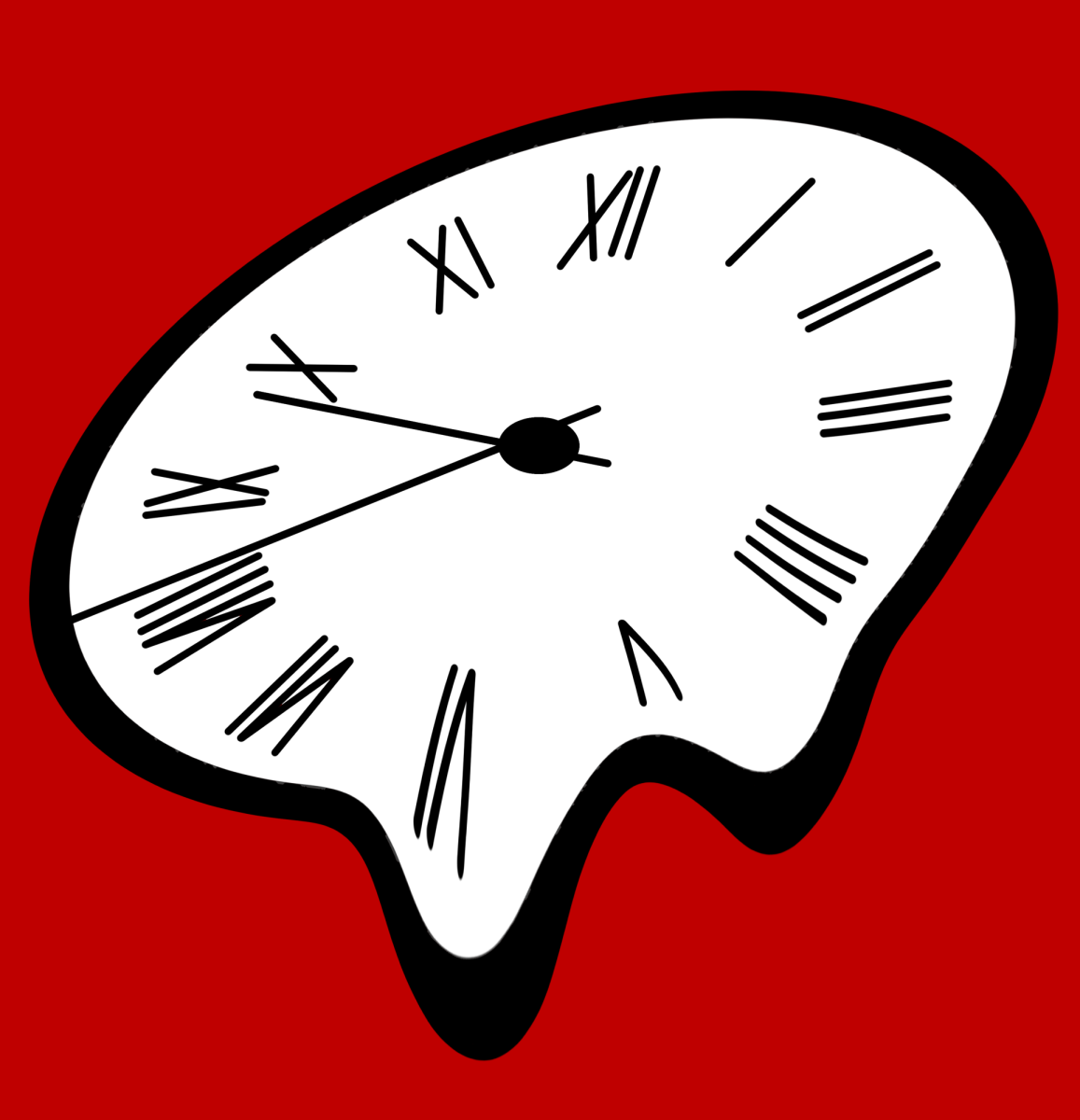
Ever since the pandemic, our perception of time seems to have been distorted.
The start of the pandemic was nearly 7 years ago. The end of it felt just a year prior, yet in reality, it had ended in 2023. Another phenomenon involves the events during the pandemic of which seemed much more compressed, with time between such events being heavily distorted and hard to recall.
For me, the feeling of repetitive dullness and similar, repeating days occurs even now– such as during school days when the week just seems to blur together. Often, day-to-day routines add to this experience of doldrums, due to many actions done through muscle memory that require little conscious effort.
This idea of the distortion of time perception had lived at the back of my mind for some time (pun intended), and along with the recent arrival of the new year, I’ve decided to look into this curious phenomenon. From a study at Baylor university by sociologists Matthew Andersson, P.h.D. and Paul Froese, P.h.D., a positive correlation between feeling that time was passing slowly and depressive symptoms were drawn.
From this we can largely infer that due to limited interpersonal contact during the pandemic affecting general mental wellness, there is a possibility in which the perception of time has been stretched.
This “stretched” time can often tire the brain, entering some kind of work-trance (for example, the muscle memory in sports or when reading a very interesting book), reducing the memories and details retained through the process.
Perhaps the reason why the events during the pandemic had seemed so blurred was because of the lack of notable, retained, memories. With the end of the “time stretch” in 2023, time seemed to “speed up” in the sense that time was being perceived slightly faster than during the monotone days of the pandemic.
Despite these ideas being my speculation through guesses and odd bits of information, I genuinely believe that the perception of time since the pandemic has been distorted largely due to the pandemic’s impact on the world as a drastic event.
And these disasters always seem to be an anchor in the perception of time. According to “Distortions in Time Perception During Collective Trauma: Insights From a National Longitudinal Study During the COVID-19 Pandemic” by Alison E. Holman (et al.), the study discusses both effects on time perception through mental health, isolation, and the general fact of the sudden COVID-19 pandemic.
Holman among others concluded that pre-pandemic mental health largely contributed to the distortion, along with later stress and trauma exposures such as grief and loss. With all of these factors combined, the relative “speed” of time in the present feels fast. And that’s probably a good thing.