

Filling the gap: How Washtenaw County student journalism helps keep the community informed
In 2009, the Ann Arbor News officially shut its doors. Since its closing, many longtime newsrooms around Washtenaw County have shrunk or disappeared. Now, student journalism in the Ann Arbor and Ypsilanti area has stepped up to keep communities informed.
The University of Michigan is based in Ann Arbor, and just 15 minutes away sits Eastern Michigan University in Ypsilanti. Stories about council meetings, neighborhood issues or basic community announcements that used to be covered by full-time journalists are now being reported on by students from these universities who are juggling classes, jobs and extracurricular commitments.
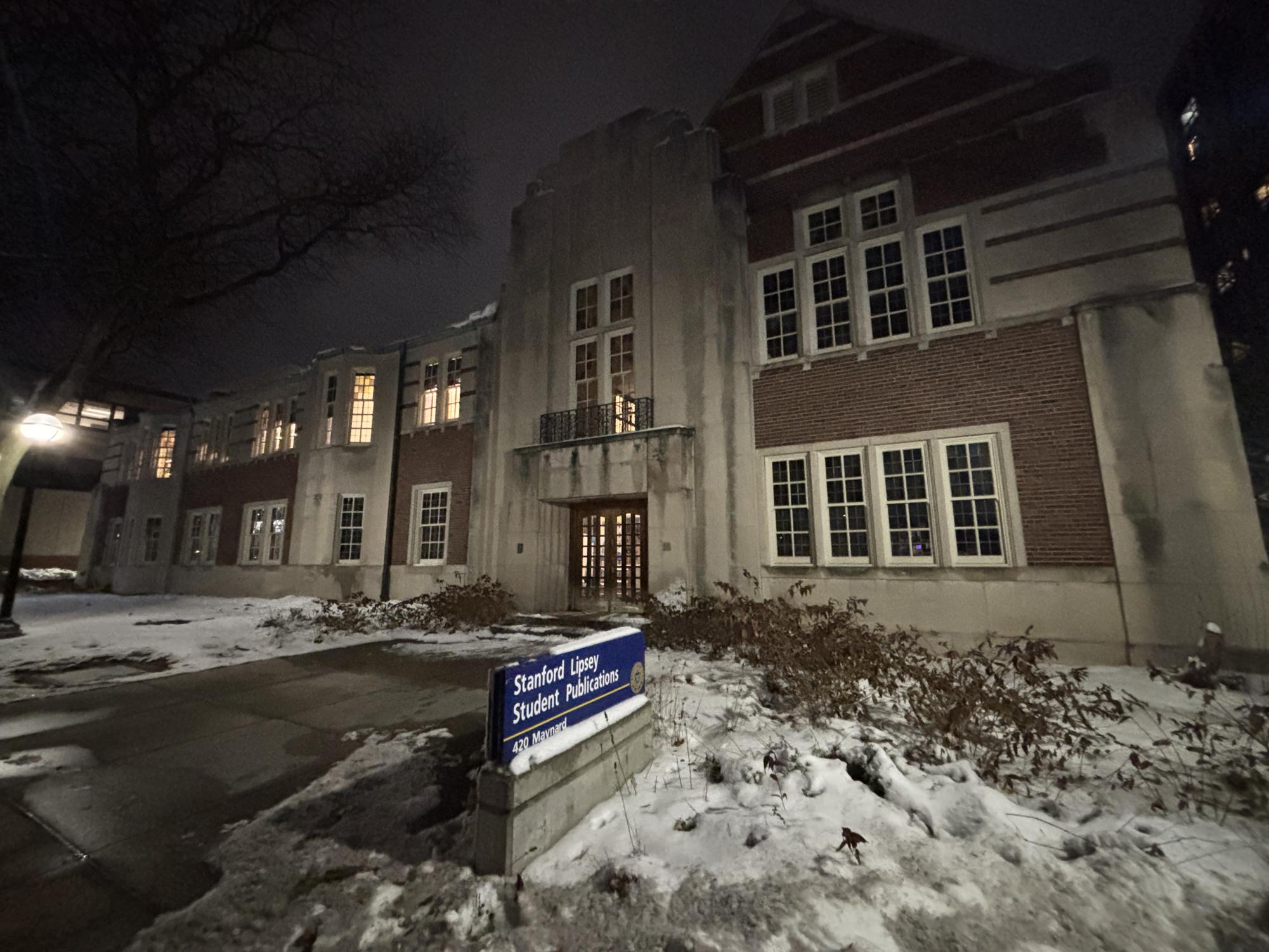
The bustling town of Ann Arbor is home to over 120,000 residents. The beating heart of it all is the University of Michigan. And its only daily print paper is The Michigan Daily, the University’s student-run newspaper.
Co-Editor-in-Chief of The Daily Mary Corey said that as a student journalist, she believes her responsibilities are to keep the university community informed as best as possible.
“The newsroom is supposed to be a space where students can share their ideas and we can create conversations on campus and allow for ideas to flow freely,” she said.
Over the past few years, as local newsrooms have begun to close, Corey said that at The Daily, they have started to take their role of holding local government accountable more seriously.
“There is some sort of pressure of, ‘if we don’t cover this, it might not get covered at all,’” she said. “And I wonder if that same feeling was there 10 or 20 years ago.”
Ypsilanti, in particular, has felt the effects of these changes. The city once had its own daily paper, the Ypsilanti Press, but it was purchased by The Ann Arbor News in 1994, more than 30 years ago. That newspaper eventually merged into MLive, a statewide, online-only outlet. MLive also does not have its own Ypsilanti section.
The Eastern Echo, Eastern Michigan University’s publication, is Ypsilanti’s only local print paper.
“We are definitely a news desert,” said Natalie Kyle, editor-in-chief of The Eastern Echo. “However, that term is a little bit subjective. Local newsrooms are disappearing at a very alarming rate, and this is all a bit new to us.”
Unlike MLive, which exists entirely online, the Echo still prints a physical paper that circulates throughout Ypsilanti and EMU’s campus. This allows residents who may not follow online news to access local coverage.
“You assume everyone has digital access to everything, but it’s also important to those who might not have access to technology or to devices or don’t own them personally who don’t have access to digital news, and that’s where the print paper comes in,” Kyle said.
The Eastern Echo covers city council meetings, campus developments and local community events, often serving as the only reporters in the room. Residents who rely on the paper can follow developments that larger, online outlets may overlook.
Lilly Kujawski, the Echo’s managing editor, encountered the harsh reality of Ypsilanti’s news gap firsthand. Last week, by the end of a city council meeting, Kujawski was the only attendee there.
“That means I was definitely the only journalist there,” Kujawski said. “I was getting tired. It was almost 11 p.m. But I felt like I needed to stay because what’s going to happen next? That is a metaphor for what The Echo does in the community. We’re here when no one else is.”
Community advocate and Thurston Nature Center Committee Chair Praveena Ramaswami said that student journalism is vital for residents who are often overlooked.
“The people who get impacted the most are the people who already don’t have a voice and aren’t being heard, and then they’re not even aware of what’s happening,” Ramaswami said. “They’re becoming more and more isolated, and so their stories and situations aren’t being told.”
Ramaswami’s concerns are echoed by other community members who notice this growing gap in local reporting. Without dedicated coverage, many residents remain unaware of important developments in their own neighborhoods.
“The issue is that people don’t know what’s happening,” Ramaswami said. “I hate to be the pessimist, but sometimes decisions are being made, and the people making these decisions might be hoping that if just a few people show up to a meeting, that it counts as community input. But the reality is, most people didn’t even know the meeting existed.”
Ramaswami said that student journalists play an important role in preventing that from happening.
“Student journalists give residents a chance to be seen and understood,” she said.
This story is part of a fundraiser with The Communicator linked here.
Your contribution will support the student journalists of Huron High School, help us to offer scholarships, cover our annual website hosting costs, and most importantly, allow us to keep recording history.